Best States for Rockhounding in the US (Ranked for 2026)
Not all states are equal for rockhounding. This ranking is based on mineral diversity, public land access, documented sites, and how beginner-friendly the collecting actually is.
Story frame
Field notes and context
Table of Contents
If you're planning a rockhounding trip — or choosing where to live based on collecting access (no judgment) — this ranking will help. We've evaluated every state based on what actually matters for collectors, not just geological fame.
How We Ranked These
Our ranking weighs four factors:
- Mineral diversity — How many different worthwhile minerals can you realistically find?
- Public land access — How much collecting-friendly public land exists? BLM and National Forest land are the backbone of US rockhounding.
- Documented sites — Are there well-documented, verified collecting locations, or is it all rumor and guesswork?
- Beginner accessibility — Can someone with no experience have a productive first trip?
1. Arizona
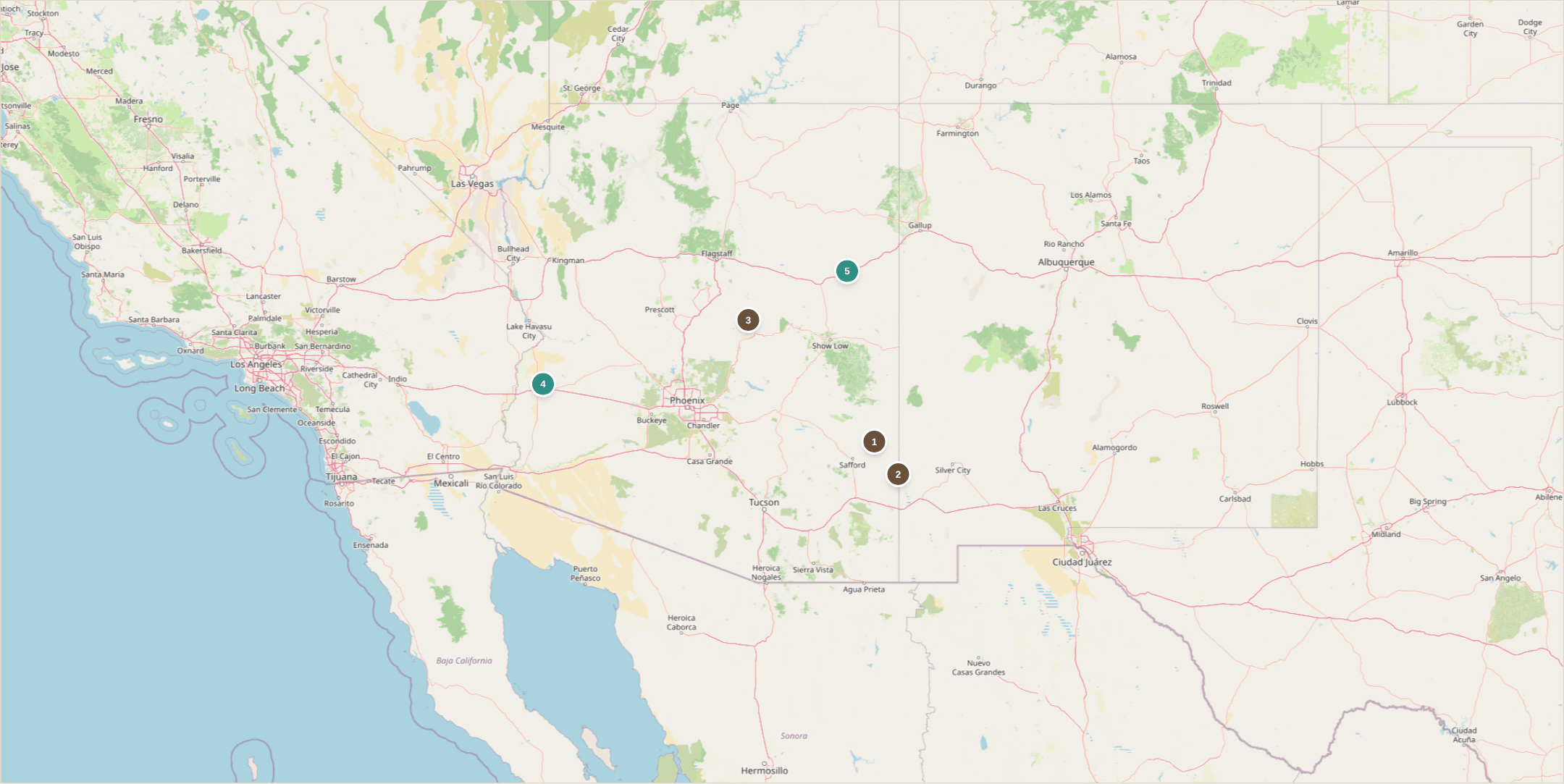
Arizona earns the top spot because it delivers on every metric. The mineral diversity is outstanding: fire agate, quartz crystals, petrified wood, Apache tears, peridot, and copper minerals. The BLM manages designated rockhound areas. The collecting season runs October through April.
Best for: Fire agate, desert collecting, BLM-managed rockhound areas
Start here: Black Hills Rockhound Area
2. Oregon
Oregon is the most well-rounded collecting state and the best for beginners. The coast delivers free agate and jasper on public beaches. Central Oregon has world-class thunder eggs. Lake County has the only gem sunstone in the world. Glass Buttes produces incredible obsidian. Year-round collecting across different regions.
Best for: Beach agates, thunder eggs, sunstone, beginner collecting
Start here: Any Oregon coast beach at low tide — our beach guide names the Oregon shores worth the drive and the one-gallon daily limit that comes with them
3. Utah
Utah combines serious mineral diversity with accessible BLM land across the western desert. The state produces topaz, geodes, red beryl, obsidian, and trilobite fossils. The Dugway Geode Beds and Topaz Mountain are two of the most iconic collecting destinations in the country.
Best for: Geodes, topaz, desert collecting
Start here: Dugway Geode Beds
4. California
California has arguably the most diverse geology of any state — gem-grade tourmaline, jade, gold, desert agates, geodes, and the state gem benitoite. It ranks #4 instead of #1 because access is more complicated: state parks restrict collecting, mining claims blanket the Sierras, and the rules change dramatically by land type.
Best for: Gem tourmaline, jade, gold panning, geodes, mineral diversity
Start here: Oceanview Mine or any North Coast beach
5. Colorado
Colorado is a strong all-round collecting state with topaz, aquamarine, quartz, and rhodochrosite (the state mineral). Mount Antero is famous for aquamarine collecting at high altitude. The combination of National Forest access and varied geology makes it a solid destination, though the best sites require physical effort and altitude acclimatization.
Best for: Aquamarine, topaz, alpine crystal hunting
Start here: Research Mount Antero or local fee-dig operations
6. Arkansas
Arkansas punches above its weight thanks to two world-class destinations: Crater of Diamonds State Park (the only public diamond mine in the US) and the Mount Ida quartz mines (the quartz crystal capital of the world). Both are beginner-friendly fee-dig operations.
Best for: Diamonds, quartz crystals, fee-dig experiences
Start here: Crater of Diamonds
7. North Carolina
North Carolina has genuine gem diversity — emeralds, sapphires, garnet, and aquamarine are all found in the western mountains. Emerald Hollow Mine is the only emerald mine in the US open to the public. Multiple fee-dig operations make it accessible for beginners.
Best for: Emeralds, sapphires, Appalachian mineral diversity
Start here: Emerald Hollow Mine
8. New York
New York might surprise people on this list, but Herkimer Diamond Mines alone earns the state a spot. The doubly terminated Herkimer diamonds (quartz crystals) are unique and world-famous. The mines are beginner-friendly with tools and guidance provided.
Best for: Herkimer diamond quartz crystals
Start here: Herkimer Diamond Mines
9. Michigan
Michigan is a specialty state — its best collecting is shoreline-based, focused on Petoskey stones (fossilized Devonian coral) along the Lake Michigan and Lake Huron shoreline. Easy, free, and unique. Michigan also produces Lake Superior agates and copper specimens, though native copper collecting requires more research.
Best for: Petoskey stones, Lake Superior agates, shoreline collecting
Start here: Petoskey stone beaches
10. Georgia
Georgia earns a top-10 spot thanks to Graves Mountain — one of the most productive mineral localities in the southeastern US. Open twice per year for special dig days, it produces museum-quality lazulite, rutile stars, and kyanite. Limited access but exceptional quality.
Best for: Lazulite, rutile, specialty minerals
Start here: Graves Mountain (dig day events)
Honorable Mentions
- New Jersey — Home to the Franklin and Sterling Hill mines, the fluorescent mineral capital of the world. Over 80 minerals glow under UV light.
- Iowa — The Keokuk Geode Region produces excellent geodes, though the best collecting is on private land with permission.
- Montana — Sapphires, agates, and gold. The Gem Mountain sapphire mine near Philipsburg is a popular fee-dig.
- Idaho — Star garnet (state gem), opals, and gold. The Spencer Opal Mine is a well-known fee-dig site.
Ready to plan your trip?
Frequently Asked Questions
Arizona consistently ranks as the best state for rockhounding due to its combination of mineral diversity (fire agate, quartz, petrified wood, Apache tears, peridot), extensive BLM public land, well-documented collecting sites, and year-round desert collecting season.
Oregon is arguably the most beginner-friendly state. Beach agate collecting on the Oregon coast requires zero tools and zero experience — just good timing and sharp eyes. Fee-dig thunder egg sites provide tools and guidance. The learning curve is practically flat.
Technically yes — every state has some geological material to find. But the quality of the experience varies enormously. States with large tracts of public land (BLM, National Forest) in the western US tend to offer the best access and most productive collecting.
For casual personal collecting on BLM and most National Forest land, no permit is needed. Fee-dig sites charge an entry fee. Some specific sites, wilderness areas, and state-managed lands require permits or prohibit collecting entirely. Always check before you go.
Your next step
Continue building your knowledge.
Recommended next step
Find your next collecting destination
Detailed field guides to sites across the country — with directions, minerals, and tips.
Sources & References
- Rock Hounding and Mineral Collecting FAQs — Bureau of Land Management
- Mineralogy Database — Mindat.org

Founder and editor, The Rockhounding Hub
Marvin runs this site and is still learning rockhounding. He builds each guide from maker specs, safety rules, and public sources.