
Table of Contents
Petoskey stone collecting is a shoreline search, not a quarry trip. In northern Michigan, the best odds usually come from public Lake Michigan beaches where wave action has already done part of the sorting for you. That makes the hunt approachable, but only if you respect park rules, shoreline closures, and Great Lakes weather.
Petoskey stones are fossil corals, and the pattern you are looking for is the six-sided or honeycomb-looking texture in polished or wet stone. On a good beach day, the challenge is not finding a stone at all; it is finding one that still shows the coral pattern clearly enough to keep.
Best Rockhounding Sites at Petoskey Stones
Petoskey State Park is the most famous name in the search, but the current access notice matters just as much as the geology. Wilderness State Park is the more flexible public shoreline option when you want a broader stretch of cobble and less event-specific traffic.
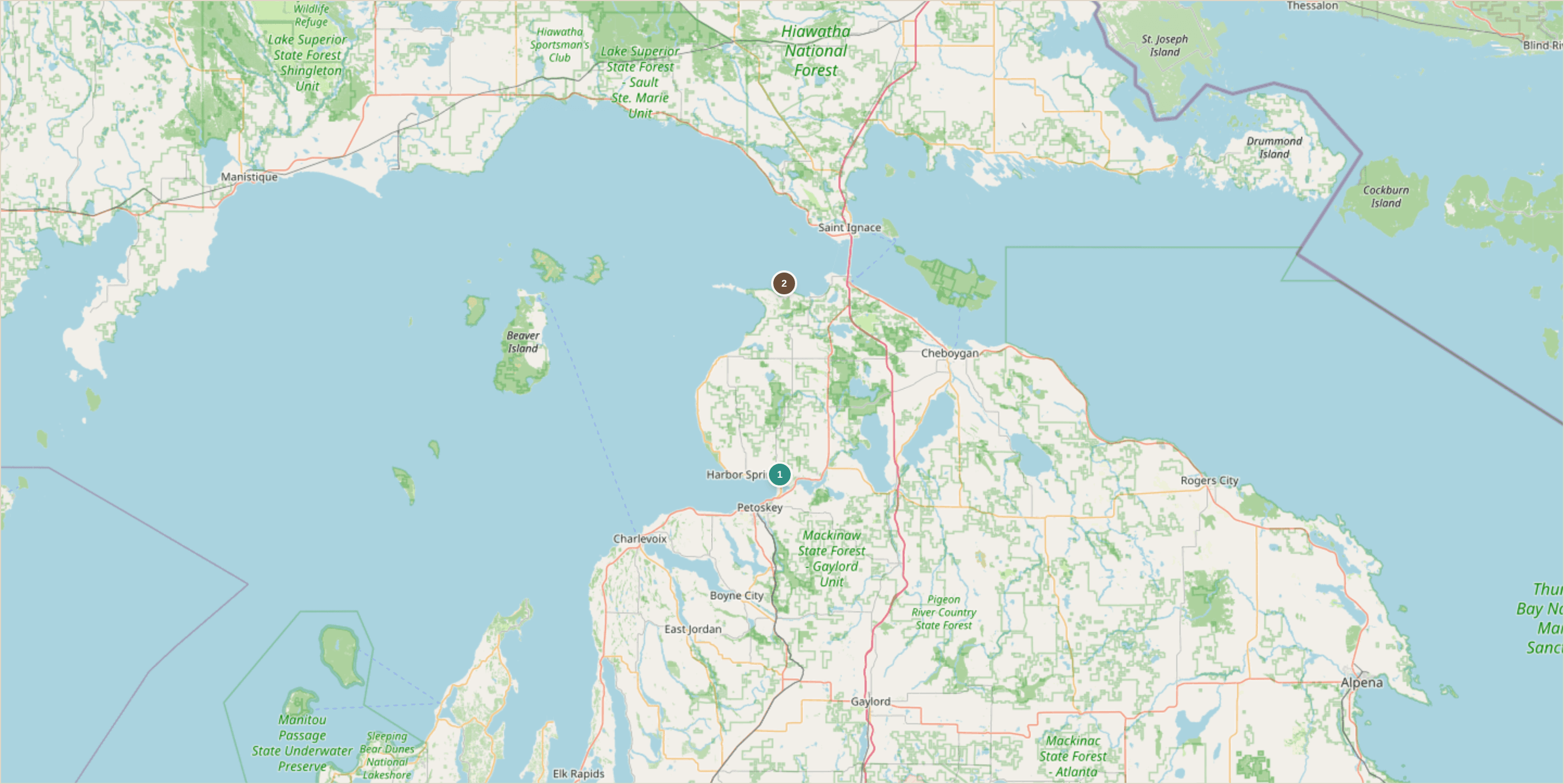
Petoskey State Park HQ / Day-Use Access
The official park page says the entire park is closed through at least May 15, 2026 while construction continues, but the shoreline remains open to foot traffic only. The pin sits at the official park access address, which is where visitors are directed to park during the closure. This is the most famous Petoskey-stone beach, but access is temporarily limited and vehicle access beyond the barricades is prohibited.
Tip: Use the official park access point at the HQ lot if you are visiting during the closure window, and keep an eye on the current park notice before you travel. The shoreline is still the collecting target, not the dunes or closed day-use areas.
Wilderness State Park Park Entrance / HQ
Wilderness State Park offers miles of Lake Michigan shoreline with wide sandy beaches and scattered cobble. The pin sits at the official park access address, which is the practical destination for shoreline collecting. It is a public option for Petoskey stones when conditions are calm, but the usual Great Lakes beach safety rules and state-park access rules still apply.
Tip: Use the shoreline after wave action once you arrive at the official park entrance. For vehicle entry, Michigan state parks require a Recreation Passport.
Rocks and Minerals You Can Find at Petoskey Stones
The main target is the Petoskey stone itself: fossilized colonial coral with a patterned hexagonal texture. Depending on the beach, you may also pick up other fossil fragments, rounded limestone, and ordinary beach cobble that is useful only if you are filling gaps in a display tray or lapidary bag.
A wet stone often looks very different from a dry one, so a pebble that looks dull on the sand may show the coral pattern clearly once you rinse it or hold it against the lake light.
Petoskey Stones Rockhounding Rules & Access
The conservative rule set is simple: collect only where the beach or park allows it, stay out of dunes and protected habitat, and treat state park closures as real closures. For vehicle entry into Michigan state parks, a Recreation Passport is required.
| Rule | Practical takeaway |
|---|---|
| Foot-traffic only at Petoskey State Park during closure | Park at the HQ lot and walk the shoreline if the current notice still applies. |
| Recreation Passport for state-park vehicle entry | Plan for the pass if you are driving into a Michigan state park. |
| Protect beach habitat | Stay out of dunes, nesting areas, and posted restoration zones. |
| Use only light surface collecting | Do not dig up the beach or leave obvious disturbance behind. |
How to Search the Shoreline
The best Petoskey-stone patches are usually the low cobble bands, the wrack line just above the water, and the places where waves have sorted stones by size. Walk slowly, scan the wet stones first, and keep checking the edges where small pieces get trapped between larger rocks.
Best Time to Go Rockhounding at Petoskey Stones
Late spring through fall is the easiest window because ice is gone, the beaches are more accessible, and warm rainstorms can expose fresh material. After a storm, or after wind-driven waves have reworked the cobble, is often the best time to walk the shore.
Recommended Gear
Bring water shoes or sturdy sandals, a small mesh bag, polarized sunglasses, water, a towel, and a hand lens if you want to inspect the coral pattern more closely. A small hand rake can help move loose gravel aside, but keep the work light and surface-based.
Safety Tips
Great Lakes shorelines can change quickly. Cold water, steep drop-offs, and slick cobble are the main hazards. If the surf is up or the beach is iced over, the collecting plan should be adjusted or postponed.
Common Mistakes
- Assuming every stone with a honeycomb pattern is a Petoskey stone.
- Ignoring the current Petoskey State Park closure notice.
- Forcing a search during rough water or near unstable shoreline edges.
- Collecting in dunes or other protected beach habitat.
FAQ
Petoskey stones are common enough that a careful beach search can be productive, but only if you treat the shoreline as a living, changing environment and keep current access rules ahead of the trip.
Planning your first collecting trip?
Most beginners skip the preparation step. Don’t — our beginner’s guide covers gear, safety, and field ID basics that’ll save you time and frustration.
Community
Recent discussion about Petoskey Stones
Field reports, tip-offs, and follow-up questions that belong next to this location guide.
Local discussion loads after the page is ready so the guide itself stays fast and fully readable.
Loading recent discussion for this area...
Frequently Asked Questions
It is Michigan's state stone, a fossilized colonial coral from Devonian-age rocks in the Traverse Group. The stone's hexagonal pattern is the clue that sets it apart from ordinary limestone.
The official park page says the shoreline remains open to foot traffic only while the park is closed through at least May 15, 2026. Check the current notice before you go.
For vehicle entry into Michigan state parks, a Recreation Passport is required. Separate local rules can still apply, so check the specific beach or park before collecting.
On public Great Lakes shorelines, the best finds are usually in the cobble and wave-wash zone, especially after storms and periods of lower water.
Small hand tools or a hand rake are the safest choice for surface collecting. Stay away from digging that disturbs dunes, beach vegetation, or protected habitat.
Yes. Michigan's official state facts page describes the Petoskey stone as fossilized coral.
Collecting sites in Petoskey Stones
Click a marker for site details on the map.
Loading map...
Your next step
Heading to Petoskey Stones? Read this before you go.
Recommended next step
Learn to identify what you find in Petoskey Stones
Practical field tests for the minerals at this site — streak, hardness, luster, and crystal habit.
Sources & References
- Petoskey State Park — Michigan Department of Natural Resources
- Petoskey State Park Rec Search Page — Michigan Department of Natural Resources
- Wilderness State Park — Michigan Department of Natural Resources
- Michigan State Parks — Michigan Department of Natural Resources
- Rock and mineral identification — Michigan Department of Environment, Great Lakes, and Energy
- State Facts and Symbols — State of Michigan