
Table of Contents
Garnet is not a single mineral species. It is a garnet group of closely related minerals that share the same crystal structure while varying in chemistry, color, and typical geological setting. That is why a serious garnet page needs to stay group-focused instead of pretending every garnet behaves like almandine.
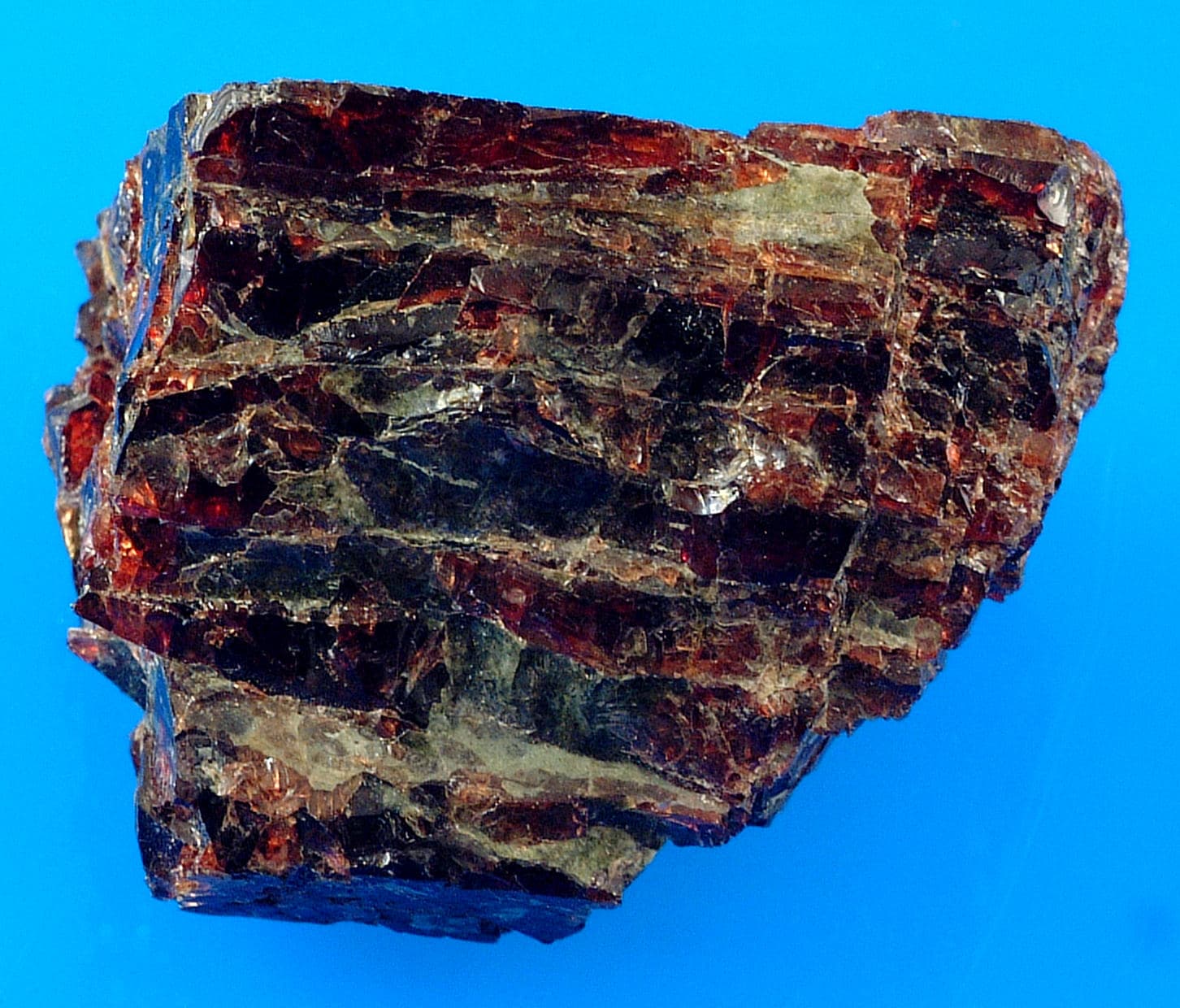
Collectors still encounter some consistent field clues across the group: equant crystal shapes, no true cleavage, white streak, relatively high hardness, and a tendency to occur in metamorphic rocks, skarns, or some pegmatitic environments. The differences show up when you narrow from the garnet group to particular species.
Appearance & Identification
Garnets vary more than many beginners expect, but the group still has a recognizable field profile.
- Crystal habit: Dodecahedra and trapezohedra are among the most classic garnet crystal forms.
- Hardness: Usually about 6.5 to 7.5, depending on the species.
- Cleavage: Garnets generally lack true cleavage.
- Streak: White.
- Color: Garnets occur in red, orange, brown, yellow, green, black, pink, and even very rare blue varieties.
- Luster: Vitreous is common, with some species looking slightly resinous.
The Garnet Group
The garnet group includes multiple mineral species rather than one fixed chemistry. GIA highlights pyrope, almandine, spessartine, grossular, and andradite as the five commercially important gem garnets, with uvarovite usually occurring as small green crystals rather than faceted stones.
That group framing explains why garnets span nearly every color and more than one formation environment. Almandine is common in metamorphic rocks, grossular and andradite often appear in calc-silicate and skarn settings, and spessartine can occur in pegmatites and manganese-rich rocks.
How Garnet Forms
Garnets form under several geological regimes, which is exactly what you would expect from a mineral group instead of a single narrowly defined species. Many garnets crystallize during metamorphism, especially where temperature and pressure allow aluminum-, calcium-, iron-, magnesium-, or manganese-bearing minerals to reorganize into garnet.
Other garnet-group minerals form in skarns and contact-metasomatic zones where hot fluids react with carbonate rocks. Some, especially spessartine-rich material, also occur in pegmatites and granite-related settings. Because the garnet group spans multiple chemistries, no single one-sentence origin story covers every member.
Where Garnet Is Found
Garnets are worldwide. Metamorphic schists and gneisses are classic host rocks for almandine-rich garnets, while skarns and calc-silicate rocks are important for grossular and andradite. Weathering can also free garnets into streams and heavy-mineral sands, so rounded garnet grains in placer deposits are common in some regions.
For collectors, that means garnet can show up both as in-place crystals in metamorphic outcrops and as resistant grains concentrated by erosion. The exact species story depends on the host rock chemistry.
Similar Minerals & Lookalikes
Garnets overlap with a few dark red or brown materials, but crystal form, hardness, and geological setting usually narrow the choice quickly.
| Mineral | How to tell it apart from garnet |
|---|---|
| Spinel | Spinel can overlap with garnet in red hand specimens, but garnet commonly forms dodecahedral or trapezohedral crystals and is far more common in metamorphic rocks. Transparent stones often require gem testing, but rough crystal habit still helps in the field. |
| Staurolite | Dark brown staurolite crystals can be mistaken for garnet in metamorphic rocks, but staurolite is softer, typically duller, and commonly forms prismatic or cruciform crystals instead of garnet's equant forms. |
| Glass | Dark red glass lacks the consistent crystal habits, higher hardness, and geological setting expected for garnet. Broken glass also shows a more obvious conchoidal, non-crystalline look. |
Beginner Tips for Collecting Garnet
- Learn the group concept. "Garnet" is often a starting ID, not the end of the story.
- Watch for equant crystals. Dodecahedral and trapezohedral forms are more useful than color by itself.
- Use the host rock. Schist, gneiss, skarn, and pegmatite settings point toward different garnet possibilities.
- Expect mixtures. Many natural garnets are chemical mixtures between end-member species.
Before you go collecting…
Most beginners head out without knowing the basics. Our beginner’s guide covers gear, safety, and the field tests that’ll help you identify what you find.
Frequently Asked Questions
Garnet is a mineral group. GIA describes garnets as closely related mineral species that share the same crystal structure but vary in chemistry and color.
Almandine is one of the most common collector garnets, especially in metamorphic schists and gneisses. Pyrope, spessartine, grossular, and andradite are also important members of the group, while uvarovite usually appears as small drusy crystals.
No. Garnet-group members share structural similarities, but hardness, density, refractive index, and color vary by species and composition. That is why group pages should not pretend garnet behaves like one narrow mineral species.
Several garnet species are stable in metamorphic environments formed under elevated heat and pressure. Almandine, for example, is common in mica schists and gneisses, which is why so many field collectors first meet garnet in metamorphic outcrops.
Where to find garnet
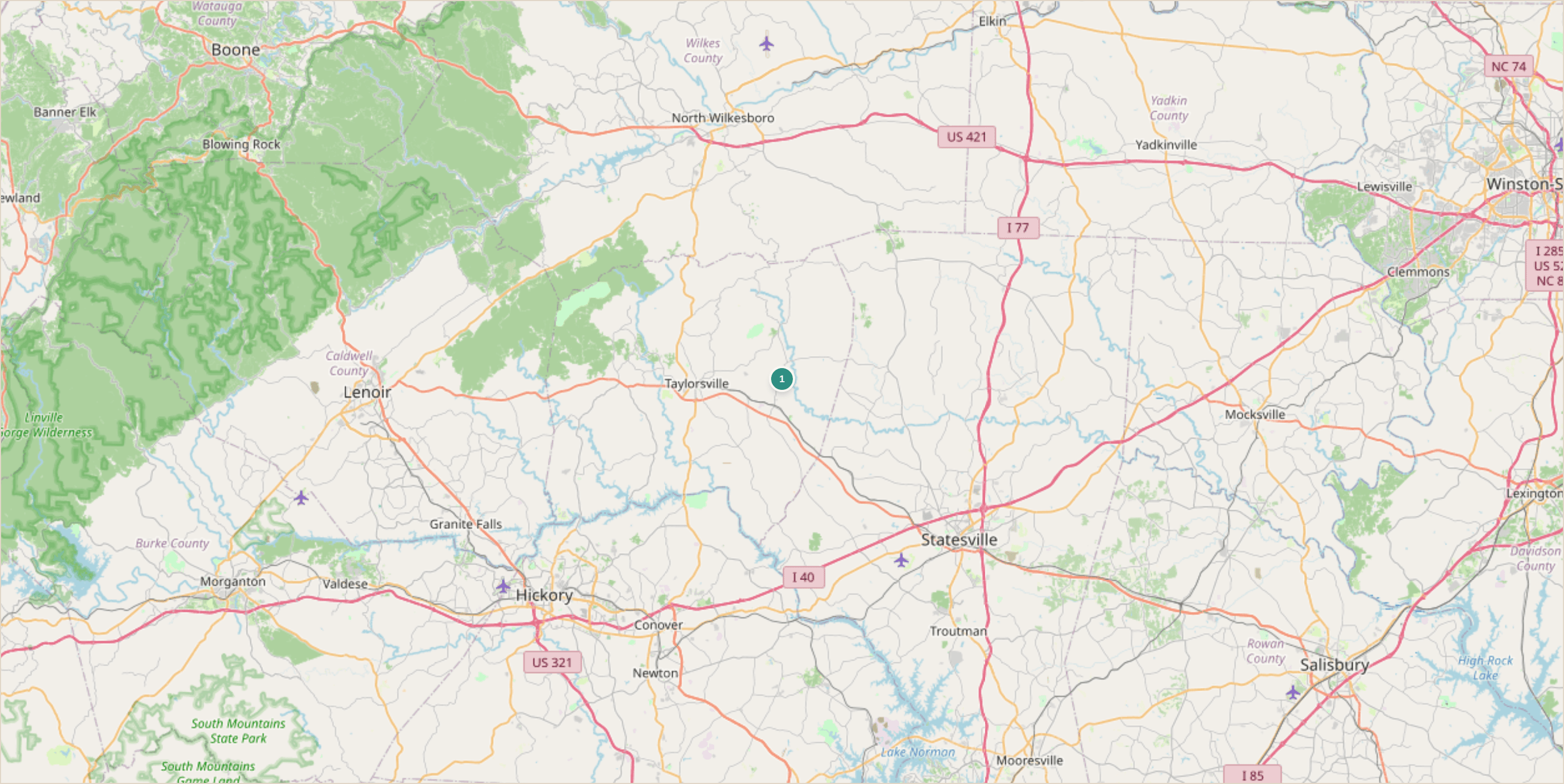
Sites where garnet has been documented by our field team.
Your next step
Now that you know garnet, here’s the logical next move.
Recommended next step
See where to find garnet in the field
1 documented sites with GPS coordinates, access info, and collecting tips.
Sources & References
- Garnet Description — GIA
- Almandine — Handbook of Mineralogy
- Grossular — Handbook of Mineralogy
- Andradite — Handbook of Mineralogy