
 © OpenStreetMap contributors
Table of Contents
Arkansas is one of the few states where a beginner can choose between two genuinely different collecting styles and still stay on solid ground. One trip is built around the Prairie Creek diamond field at Crater of Diamonds State Park, where the park's search area is the entire point of the visit. The other is the quartz country around Mount Ida, where the main decisions are about public versus private access, road conditions, and how much digging you actually want to do.
That split is what makes Arkansas useful to plan around. The Arkansas Geological Survey notes that quartz veins and crystal deposits are concentrated through the Ouachita Mountains, while the state's diamond-hunting story is tied to the Prairie Creek lamproite near Murfreesboro. If you keep those two systems separate in your head, the rest of the state's rockhounding logic gets much easier.
Best Collecting Sites in Arkansas
If you are starting from zero, the best Arkansas approach is not to chase every rumored site. Start with one diamond trip and one quartz trip. That gives you the clearest picture of how Arkansas collecting actually works before you spend time on vaguer targets.
Crater of Diamonds State Park Search Area
Arkansas State Parks keeps collecting focused on the park's plowed diamond search field near Murfreesboro. This is the most beginner-friendly collecting experience in the state because visitors can search the field and keep what they find.
Tip: Recent rain and fresh plowing are the two conditions worth watching most closely. Bring any suspicious stone to the Diamond Discovery Center before guessing at an identification.
Crystal Vista Trail
The clearest public quartz stop in Arkansas. The Forest Service describes Crystal Vista as a former commercial crystal mine where quartz crystals can be collected from the ground surface, which makes it the safest public starting point in Mount Ida's quartz district.
Tip: Treat it as a surface-collecting site unless the current Forest Service guidance says otherwise. Dry weather usually matters more than raw luck here because roads and exposed material both improve.
Mount Ida Fee-Dig Quartz Mines
The Mount Ida and Jessieville area supports the state's best-known private quartz experience. The exact mine, fee structure, and digging style vary by operator, but the basic pattern is consistent: this is where you go when you want more than a public surface search.
Tip: Do not assume one mine's hours, booking policy, or tool rules apply to another. Pick the mine first, then plan the trip around its current instructions and weather window.
Collecting by Region
Arkansas does not reward lazy statewide advice. Most of the useful collecting story compresses into two zones, and each zone asks for a different plan.
Ouachita quartz country
The Arkansas Geological Survey says the main quartz belt is restricted to the core region of the Ouachita Mountains. This is the Arkansas that most crystal collectors mean when they talk about the state. Mount Ida, Jessieville, and the surrounding district are where quartz is the main reason to go, and the trip quality depends less on broad geology than on the exact access model you choose.
Public-land collectors usually start with Crystal Vista because the Forest Service explicitly frames it as a former crystal mine where quartz crystals can be collected from the ground surface. Everyone else usually moves toward private mines, where the experience can shift from simple tailings picking to more deliberate digging depending on the operator.
Pike County and the Prairie Creek diamond field
The diamond story is different. The Arkansas Geological Survey describes the Prairie Creek pipe as the state's best-known diamond-bearing intrusion, and Arkansas State Parks turns that geology into a public collecting experience through the park's plowed search field. That is why Crater of Diamonds feels unlike almost every other famous rockhounding destination in the country: the field itself is the destination, and the rules are comparatively easy to understand once you accept that all searching stays inside the park's designated area.
What You Can Find in Arkansas
Arkansas is best known for two things, and both deserve to stay at the center of the page: quartz crystals and diamonds.
- Quartz crystals - Arkansas is known worldwide for quartz crystal production, and quartz crystal was designated the state mineral. Clear points, clusters, phantoms, and drusy material are the finds most collectors are realistically chasing in the Ouachitas.
- Diamonds - The public search field at Crater of Diamonds is the state's signature oddity. The park is built around the idea that visitors can search and keep anything they recover in the designated area.
- Amethyst, agate, jasper, quartz, and barite - These are among the non-diamond materials Arkansas State Parks highlights for Crater of Diamonds visitors. A good day there can still be worthwhile even if no diamond turns up.
- Associated quartz-belt minerals - The Arkansas Geological Survey notes that Arkansas quartz commonly occurs with clay minerals and sometimes with calcite, chlorite, and other accessory species. Those matter more for understanding the specimens than for planning a beginner's first bucket.
The practical takeaway is simple: if you want a broad mixed-material trip, Arkansas is not the best state to force into that role. It is strongest when you target one system well instead of expecting the whole state to behave like a generalized paydirt field.
Arkansas Rockhounding Rules, Permits & Legality
Arkansas access rules make sense once you separate them by land manager. That is the right way to think about the state and the wrong way to get burned by assumptions.
| Land type | What you can safely assume | Practical takeaway |
|---|---|---|
| Crater of Diamonds State Park | Collecting happens in the designated search area. | Pay admission, stay inside the field, and use only park-allowed tools. |
| Ouachita National Forest hobby collecting | Personal-use collecting can be allowed, but methods and limits still matter. | Use current Forest Service guidance and stay conservative about digging. |
| Private Mount Ida mines | Access exists only on the operator's terms. | Book the mine first and treat its rules as site-specific, not statewide. |
The Forest Service's recreational collecting guidance is useful here because it pushes against a common Arkansas mistake: assuming that because quartz is famous in the Ouachitas, every promising cut, wash, or hillside is fair game. It is not. Hobby collecting still lives inside agency rules, claim boundaries, and private property lines.
Best Time to Go Rockhounding in Arkansas
Spring and fall are the easiest statewide seasons because they work for both major Arkansas trip types. They keep the Crater field more tolerable and the Mount Ida district easier to drive, walk, and dig in.
The timing nuance matters, though. At Crater of Diamonds, fresh rain and recent plowing improve the search field. In quartz country, the best day is often a dry window after weather has washed material into view but before roads turn the trip into a recovery problem.
Recommended Gear
Arkansas does not need a giant specialty kit, but it does reward the right one. Bring water, sturdy footwear, gloves, eye protection, a bucket or bag, and a kneeling pad or garden seat if you are spending the day at Crater of Diamonds.
For quartz-country trips, add a tarp, specimen wrap, and whatever hand tools the current site explicitly allows. The key is not to pack for the entire state at once. Pack for a field day or a quartz day.
Safety Tips
The Arkansas hazards are less dramatic than desert collecting, but they are still the things that ruin trips: heat, slick clay, bad footing, and preventable eye injuries around rock and tools.
- Wear eye protection anywhere tools or loose rock are involved, especially around quartz digging and tailings.
- Carry more water than the weather report makes you think you need, especially at Crater where open ground amplifies sun exposure.
- Treat muddy roads in the Ouachitas as a real access issue, not a minor inconvenience.
- Slow down on steep or loose ground. Arkansas quartz country is more about slips and strains than heroic field hazards.
Common Mistakes
- Choosing the wrong Arkansas trip - Many beginners say they want "Arkansas" when what they really want is either a family-friendly diamond field or a quartz-specimen trip. Pick one.
- Assuming Mount Ida is all public - It is not. Public Crystal Vista access and private mine access are different products.
- Forcing bad road conditions - Quartz country can turn a promising day into a stuck-vehicle day fast.
- Ignoring non-diamond finds at Crater - The field produces more than diamonds, and a good stone day is still a good day.
- Using statewide language for site-specific rules - In Arkansas, access decisions usually fail at the site level, not the state level.
Location pages in Arkansas
Specific destinations currently covered inside this state guide.
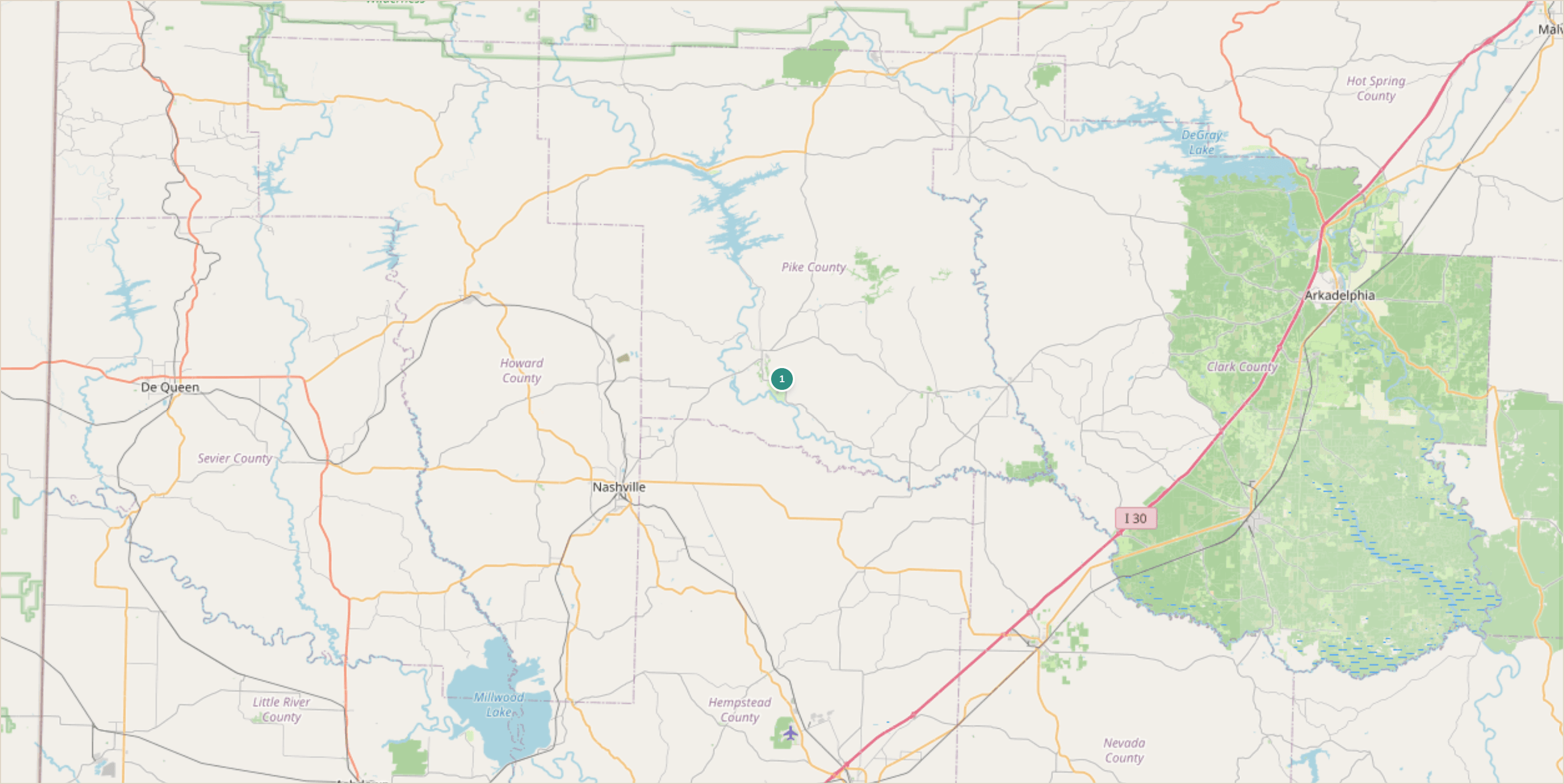
Arkansas
EasyCrater of Diamonds State Park
The only public diamond mine in the world. Finders keepers policy — every visitor keeps whatever they find. Over 75,000 diamonds have been unearthed here since 1906, including the 40-carat Uncle Sam.
Arkansas
ModerateMount Ida Quartz Mines
The quartz crystal capital of the world, with several fee-dig mines offering surface collecting and tailings digging. Known for clear, phantom, and tabular quartz crystals.
Community
Recent discussion in Arkansas
Trip notes, collecting updates, and local questions tied to this state guide.
Local discussion loads after the page is ready so the guide itself stays fast and fully readable.
Loading recent discussion for this area...
Planning your first collecting trip?
Most beginners skip the preparation step. Don’t — our beginner’s guide covers gear, safety, and field ID basics that’ll save you time and frustration.
Frequently Asked Questions
Yes, if you choose the right trip. Crater of Diamonds is the easiest first outing in the state, and Crystal Vista is the simplest public quartz stop. The private Mount Ida mines are a good next step once you know whether you want a fee-dig day.
Sometimes, but the answer depends on the site. At Crater of Diamonds State Park, finds from the search area are yours to keep. On National Forest land, collection is limited and should stay inside current Forest Service rules. Private mines set their own digging and take-home rules.
No. Crystal Vista is the cleanest public-access stop, but much of the best-known quartz collecting around Mount Ida happens on private fee-dig properties. Public and private access are not interchangeable there.
On many National Forest hobby-collecting sites, personal-use surface collection may not require a permit, but the Forest Service rules still control what tools and methods are allowed. Private mines and state parks work differently, so check the exact site before you go.
Rain helps both major Arkansas collecting styles, but in different ways. At Crater of Diamonds it improves visibility in the plowed field. In quartz country, a dry window after rain is usually better because roads and slopes become safer while recently washed material is still easier to spot.
Quartz crystals and public diamond hunting. Arkansas quartz from the Ouachita Mountains is famous enough that quartz crystal was named the state mineral, and Crater of Diamonds remains the state's most unusual public collecting experience.
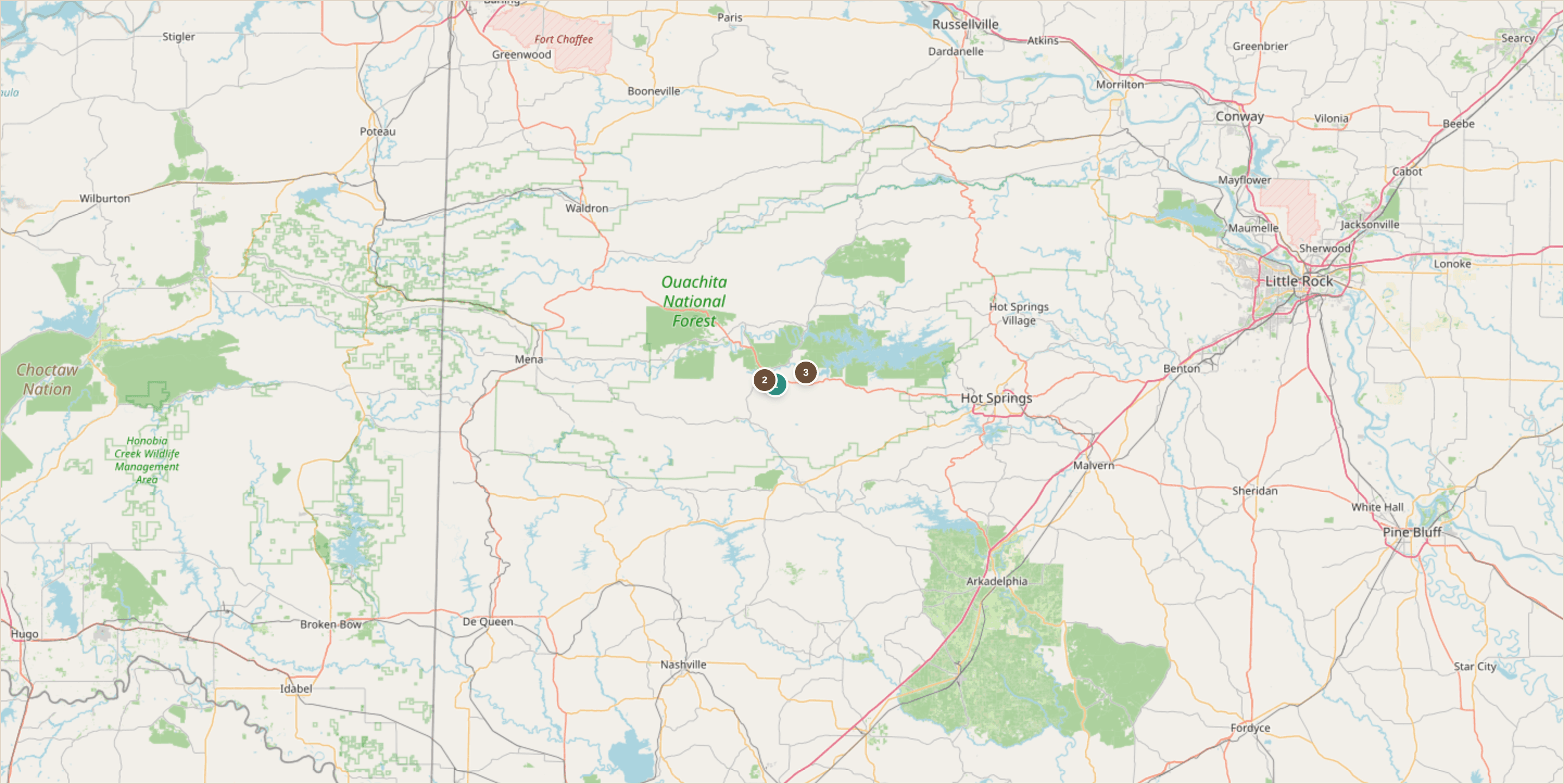
Collecting sites in Arkansas
Click a marker for site details on the map.
Loading map...
Your next step
Heading to Arkansas? Read this before you go.
Recommended next step
Learn to identify what you find in Arkansas
Practical field tests for the minerals at this site — streak, hardness, luster, and crystal habit.
Sources & References
- Crater of Diamonds State Park — Arkansas State Parks
- Digging for Diamonds — Arkansas State Parks
- What Should I Bring to Crater of Diamonds — Arkansas State Parks
- Crystal Vista Trail — U.S. Forest Service, Ouachita National Forest
- Recreational Mineral Collecting — U.S. Forest Service
- Ouachita National Forest Recreation — U.S. Forest Service, Ouachita National Forest
- Arkansas Quartz Crystals — Arkansas Geological Survey
- Finding Diamonds in Arkansas — Arkansas Geological Survey
- Crater of Diamonds State Park Geology — Arkansas Geological Survey