
Table of Contents
The Keokuk geode region is one of the Midwest's classic collecting stories, but the access story is easy to get wrong if you rely on the place name alone. The Iowa Geological Survey says the productive region sits within about a 35-mile radius of Keokuk, and that the best local geodes are found in specific stream drainages and excavations. At the same time, the Iowa DNR is explicit that geodes cannot be removed from Geode State Park.
That means the trip is really about permission, patience, and choosing the right land. If you want a useful day in southeastern Iowa, you need to separate the public park stop from the actual collecting ground and then verify landowner access before you touch anything.
Best Rockhounding Sites at Keokuk Geode Region
There are productive areas around Keokuk, but they are not one uniform collecting field. Some spots are stream drainages, some are excavations, and some are simply private land that only works if the landowner says yes. The right plan is to use the geology to narrow the search and then let the access rules decide whether you actually get to dig.
Geode State Park
The Iowa DNR says geodes are on display in the park office, but it is prohibited to remove geodes from the park. That makes Geode State Park useful as a reference stop and a family-friendly place to see what the local material looks like, but not as a collecting location.
Tip: Use the park as a geology stop, not a collecting stop. If you want actual field material, treat the park as a place to learn the look and then move to permission-based ground elsewhere.
Keokuk-area stream drainages
The Iowa Geological Survey says Keokuk geodes can be found in specific stream drainages and excavations in parts of southeastern Iowa, especially in Lee, Henry, and Van Buren counties. When water erodes the Warsaw Formation, geodes can accumulate in the stream channels, which is why the area stays productive after wet weather.
Tip: Do not assume a drainage is open just because it looks exposed. Ask first, respect fences, and be ready to leave empty-handed if the landowner says no.
Lower Warsaw Formation exposures and excavations
The Iowa Geological Survey notes that fresh geodes can be dug from exposures of the lower Warsaw Formation, where they are concentrated in certain layers. This is the best way to think about the region: geodes are real and common, but the productive spots are specific, layered, and usually on land where permission matters.
Tip: A bricklayer's hammer or a rock hammer is usually enough for the field work described by the Iowa Geological Survey. Keep the work shallow, sort specimens carefully, and do not trespass to reach a better-looking outcrop.
Rocks and Minerals You Can Find at Keokuk Geode Region
Keokuk geodes are the signature specimen. The Iowa Geological Survey says quartz dominates most of them and calcite is also common, while the park and region can also produce a wide range of interior crystal habits and colors. That makes these geodes useful both for display and for learning how different host layers affect the interior look.
The field takeaway is simple: look for rounded, lumpy stones, but expect the best results where erosion has already concentrated geodes into the lower Warsaw Formation or into stream channels. Surface clues matter, but the geologic layer matters more.
- Quartz dominates most Keokuk geodes.
- Calcite is common and attractive in many specimens.
- The region is famous for the number and variety of geodes, not for a broad mineral mix.
Keokuk Geode Region Rockhounding Rules & Access
The official access rule is blunt: most geode-collecting localities are on private land and permission must be secured before entering or removing rocks. The Iowa Geological Survey also says geode collecting is not permitted in state parks. That makes the Keokuk area a permission- first destination, not a casual public-land outing.
Local leads can help you find possible landowners, but they do not replace the landowner's answer. If you do not have clear permission, you do not have a collecting site.
| Access question | Practical answer |
|---|---|
| Geode State Park | View-only stop; geode removal is prohibited. |
| Stream drainages and excavations | Usually private or permission-based access. |
| Landowner permission | Required before entering or removing rocks at most productive localities. |
Best Time to Go Rockhounding at Keokuk Geode Region
Late fall through spring is the easiest window because the vegetation is lower and the ground is often easier to inspect after rain or runoff. In mid-summer, the foliage and heat can make the same land much harder to read, which slows the search and raises the frustration level.
After a weather event, check whether stream channels have actually exposed new material before you spend all day walking dead ground. The best Keokuk trips are usually the ones where geology and weather line up.
Recommended Gear
Bring a bricklayer's or rock hammer, gloves, eye protection, a bucket, water, boots with traction, and a field bag or wrap for fragile geodes. If you have a landowner's permission, keep the digging kit compact and respectful of the ground you are working.
A hand lens is useful, but the real gear item here is a polite ask. A good conversation with the landowner will do more for your day than a fancier hammer.
Not sure which hammer that means? A bricklayer's hammer and a rock pick do slightly different jobs. Our guide to rock hammers and chisels compares the common forms so you can pick one before the trip.
Safety Tips
Stream banks can be slippery, excavations can have hidden edges, and wet weather can turn a simple field walk into a mud problem. Keep a clean line of travel back to your vehicle, and do not stand under a cut or bank just because the geodes look better there.
The legal risk is trespass; the practical risk is footing. Both are easy to avoid if you slow down and ask before you step across a fence line or enter a working cut.
Common Mistakes
- Assuming Geode State Park allows collecting because the name sounds convenient.
- Working a stream drainage without landowner permission.
- Expecting a public-land-style casual pickup trip.
- Overlooking the lower Warsaw Formation and chasing the wrong exposures.
- Leaving home without a plan for mud, wet footing, or property boundaries.
FAQ
Keokuk is a good example of a region where the geology is generous but the access is not. If you keep the park stop separate from the permission-based collecting ground, the whole trip becomes much easier to plan and much less likely to go wrong.
Planning your first collecting trip?
Most beginners skip the preparation step. Don’t — our beginner’s guide covers gear, safety, and field ID basics that’ll save you time and frustration.
Community
Recent discussion about Keokuk Geode Region
Field reports, tip-offs, and follow-up questions that belong next to this location guide.
Local discussion loads after the page is ready so the guide itself stays fast and fully readable.
Loading recent discussion for this area...
Frequently Asked Questions
No. The Iowa DNR says geodes are displayed in the park office, but removing geodes from the park is prohibited.
The Iowa Geological Survey points to specific stream drainages and excavations in southeastern Iowa, especially in Lee, Henry, and Van Buren counties, where lower Warsaw Formation exposures produce geodes.
Yes at most productive localities. The Iowa Geological Survey says most geode-collecting localities are on private land and permission must be secured before entering or removing rocks.
Quartz is dominant in most, and calcite is also common. The Iowa Geological Survey says an additional 17 minerals have been identified in Keokuk geodes.
Late fall through spring is usually the easiest window because the vegetation is lower and fresh runoff can expose new material in stream drains and cuts.
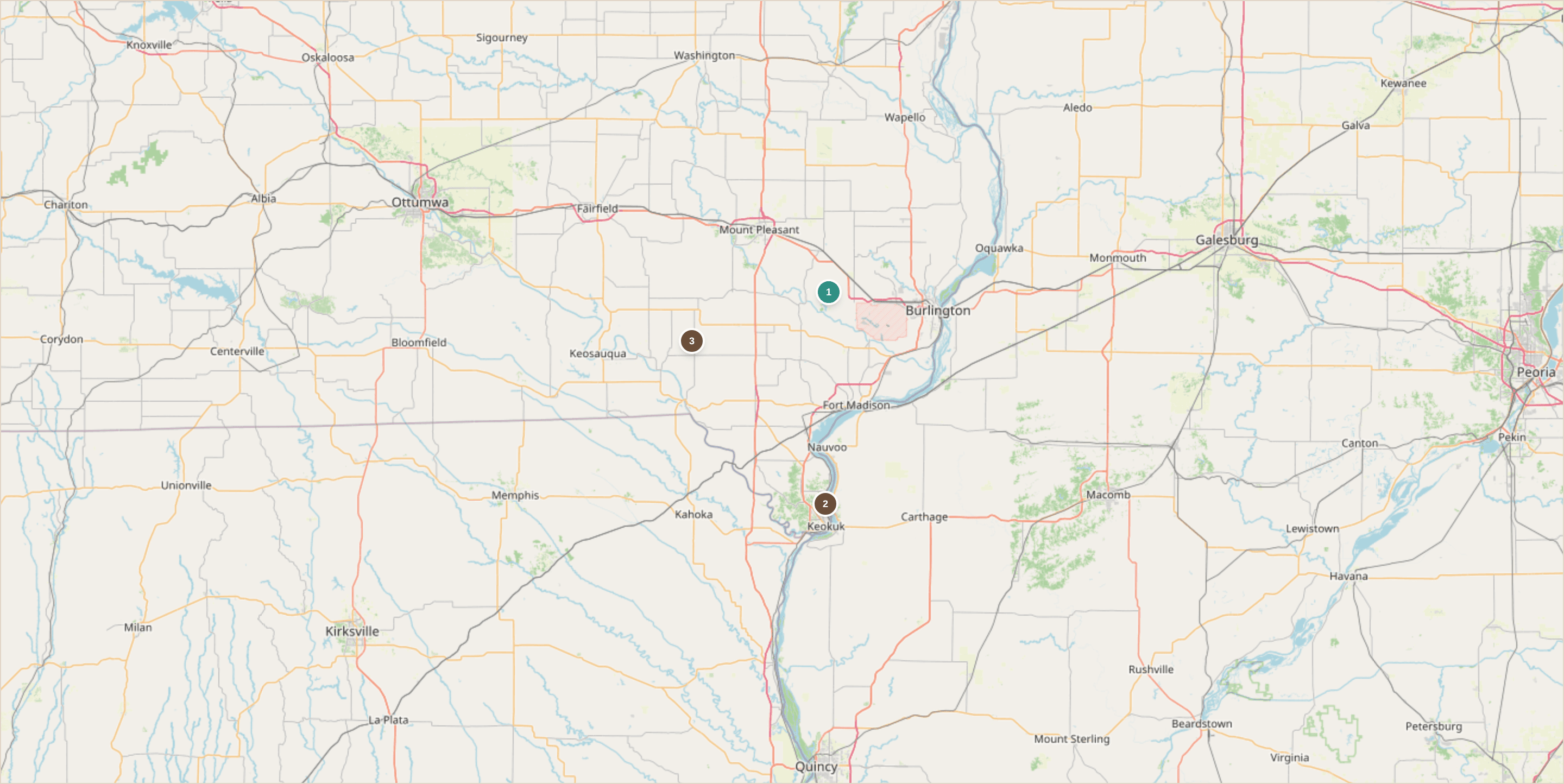
Collecting sites in Keokuk Geode Region
Click a marker for site details on the map.
Loading map...
Your next step
Heading to Keokuk Geode Region? Read this before you go.
Recommended next step
Learn to identify what you find in Keokuk Geode Region
Practical field tests for the minerals at this site — streak, hardness, luster, and crystal habit.
Sources & References
- Iowa Geodes — Iowa Geological Survey, University of Iowa
- Geode State Park — Iowa Department of Natural Resources