
Table of Contents
Petoskey stones are one of the clearest examples of a rockhound term that is really a fossil term. They are fossil colonial coral, and the famous pattern is what turns an ordinary gray stone into something instantly recognizable.
Michigan context matters here. A stone with the right pattern found on a Great Lakes beach means something very different from a random patterned limestone chunk pulled from somewhere else with no locality story.
Appearance & Identification
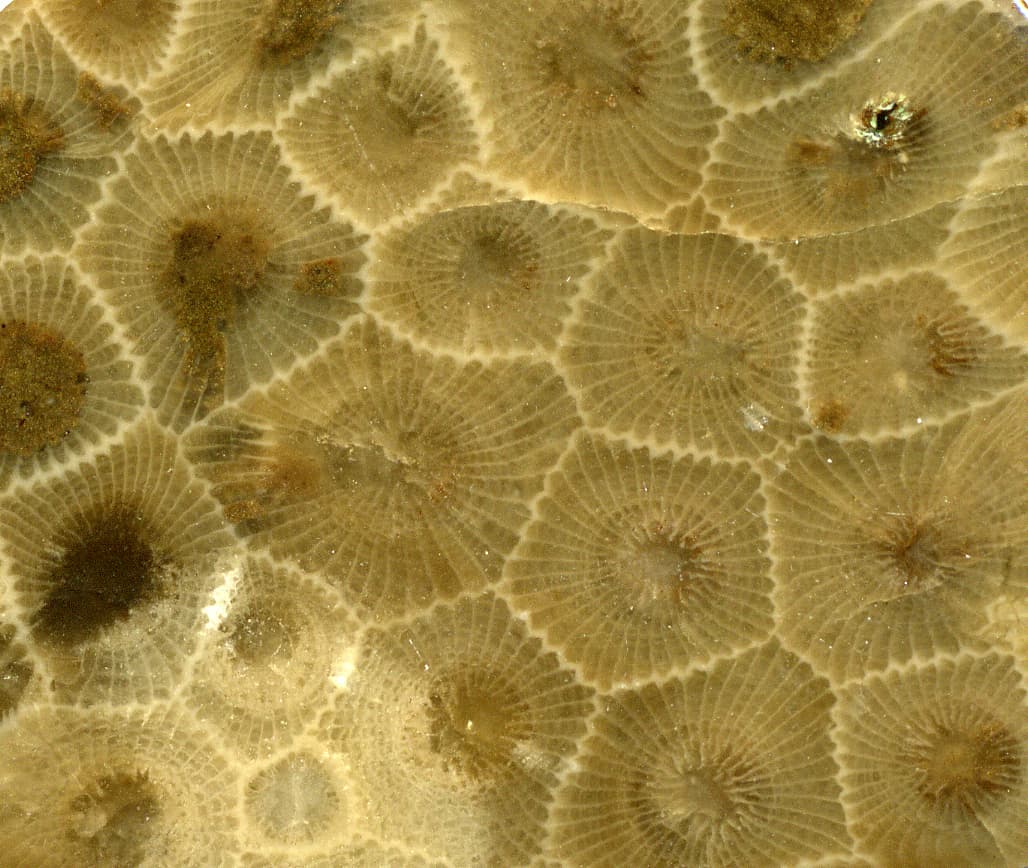
- Pattern: The hallmark is the repeating hexagonal or radiating coral-cell pattern, especially visible when wet or polished.
- Texture: Dry surfaces can look plain, chalky, or low-contrast until the pattern is revealed.
- Composition: As fossil coral in limestone, Petoskey stones are softer than quartz-family materials.
- Locality: Michigan shoreline and glacial context is central to the proper collector use of the name.
How Petoskey Stones Form
Petoskey stones are fossilized colonial coral, most famously Hexagonaria, preserved in limestone and later redistributed by glacial action and shoreline processes.
That history explains why many finds are beach-worn and rounded rather than fresh outcrop pieces with obvious coral structure at first glance.
Where Petoskey Stones Are Found
Petoskey stones are especially associated with Michigan and the Great Lakes region. They are part geology, part glacial transport story, and part beach-hunting culture.
On this site, Michigan is the defining field context because the Petoskey page is built around shoreline logic rather than generic inland fossil collecting.
Lookalikes & Similar Material
Most confusion comes from calling any patterned limestone a Petoskey stone. The specific fossil coral pattern and Michigan context are what tighten the ID.
| Mineral | How to tell it apart from Petoskey stones |
|---|---|
| Fossil Coral | Petoskey stones are a specific Michigan fossil coral type, while fossil coral as a broader term covers many corals and preservation styles. |
| Limestone Fossils | Many limestone fossils show shells or fragments rather than the honeycomb-style colonial coral pattern of a Petoskey stone. |
| Petrified Wood | Petrified wood preserves plant structure, while Petoskey stones preserve colonial coral cells. |
Collecting Tips
- Search after wave action when fresh material may be exposed on the shoreline.
- Wet suspicious stones to reveal the coral pattern before discarding them.
- Keep collection rules in mind because shoreline access and collecting limits vary.
Before you go collecting…
Most beginners head out without knowing the basics. Our beginner’s guide covers gear, safety, and the field tests that’ll help you identify what you find.
Frequently Asked Questions
No. They are fossil coral, though collectors often group them with lapidary and rockhounding finds.
Moisture or polish increases contrast and makes the coral cell pattern easier to see.
They are strongly associated with Michigan shorelines and glacially transported material in the Great Lakes region.
Your next step
Now that you know petoskey stones, here’s the logical next move.
Recommended next step
Find collecting locations near you
Detailed field guides to rockhounding sites across the country.
Sources & References
- Petoskey Stone Information — Michigan DNR