
Table of Contents
Tourmaline is a mineral group, not a single mineral species. That group framing is important because collectors use one name for crystals that share a crystal structure but vary in chemistry, color, and some field details.
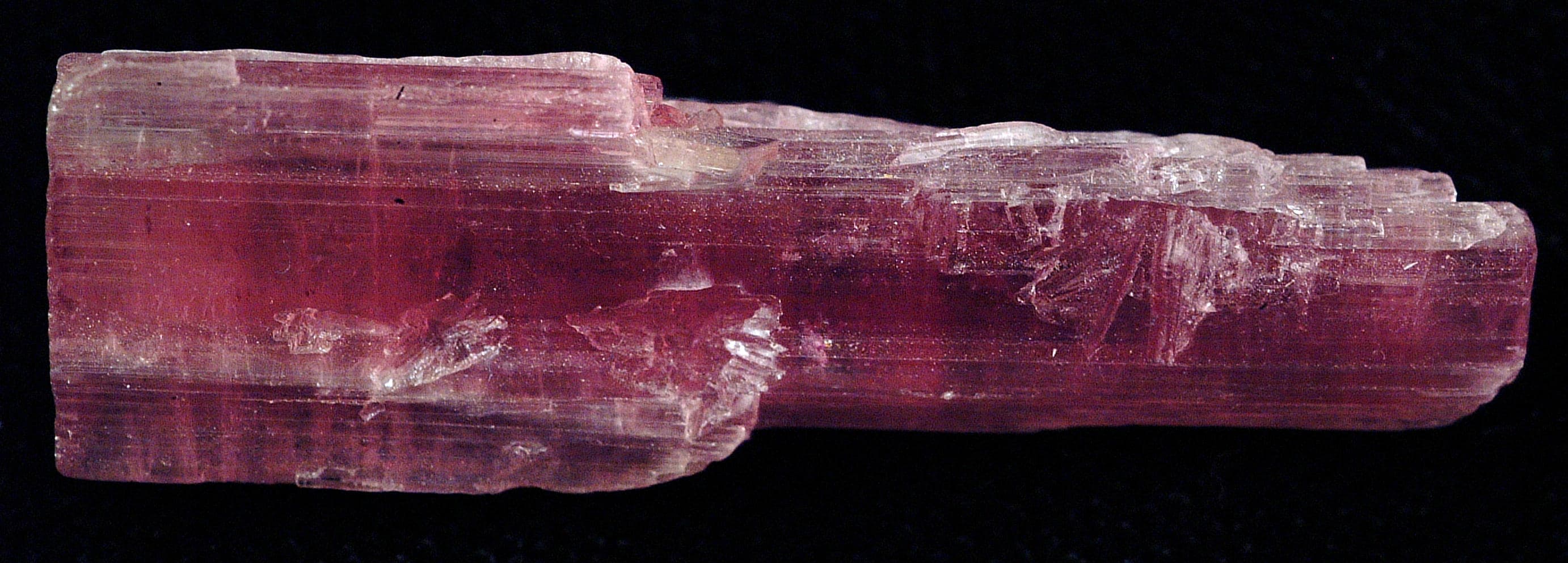
Even so, tourmaline still has a recognizable collector profile. In plain terms, tourmaline is a mineral group most beginners first notice through long prismatic crystals, strong lengthwise striations, high hardness, and a color range broad enough to include black schorl, green and blue gems, pink rubellite, and multicolored crystals.
Appearance & Identification
Tourmaline is often easier to recognize by shape than by chemistry.
- Crystal habit: Crystals are commonly elongated and prismatic, sometimes acicular, and often terminate with trigonal forms.
- Striations: Longitudinal striations running along the length of the crystal are one of the most useful field clues.
- Hardness: Commonly around Mohs 7 to 7.5.
- Cleavage: Very poor, so tourmaline does not usually break on clean cleavage planes.
- Color: Black, green, blue, pink, red, yellow, brown, colorless, and strongly zoned crystals all occur.
The Tourmaline Group
GIA describes tourmalines as a group of closely related mineral species that share the same crystal structure but have different chemical and physical properties. Handbook of Mineralogy pages for schorl and elbaite reinforce that group view by listing them as members of the tourmaline group rather than treating "tourmaline" as one fixed composition.
For collectors, schorl and elbaite are the names that matter most. Schorl is usually black and common in many rocks, while elbaite covers a large share of the colorful gem and specimen material people recognize from pegmatites.
How Tourmaline Forms
Tourmaline forms in several environments, but pegmatites are especially important for collector-quality crystals. GIA highlights pegmatites as a major source of gem tourmalines, while Handbook of Mineralogy lists schorl and elbaite in granites, granite pegmatites, hydrothermal veins, and some metamorphic rocks.
That range helps explain why black tourmaline can appear in ordinary pegmatitic or metamorphic contexts while vividly colored elbaite is more strongly tied to chemically evolved pegmatites. The shared crystal style remains recognizable even when the color story changes.
Where Tourmaline Is Found
Tourmaline is worldwide. Handbook of Mineralogy lists classic occurrences across Europe, Brazil, Afghanistan, Pakistan, Madagascar, Namibia, and the United States, with major U.S. localities in Maine, Connecticut, and California for gem and specimen material.
Collectors most often meet tourmaline in pegmatites, but it also turns up in some hydrothermal veins, metamorphic rocks, and as detrital grains after weathering. The exact species and color depend strongly on the host environment.
Similar Minerals & Lookalikes
Tourmaline's crystal habit is distinctive, but a few dark or elongate minerals can still confuse beginners.
| Mineral | How to tell it apart from tourmaline |
|---|---|
| Hornblende | Dark prismatic hornblende can resemble black tourmaline at a glance, but hornblende shows good cleavage and is noticeably softer. Tourmaline typically lacks useful cleavage and often has stronger longitudinal striations. |
| Beryl | Beryl also forms elongate crystals, but tourmaline crystals are more commonly strongly striated lengthwise and span a wider range of black, green, pink, and zoned material in pegmatites. |
| Quartz | Tourmaline crystals are typically more elongate and striated than quartz. Quartz lacks tourmaline's trigonal prism habit and is not usually black in long columnar prisms unless it is included or smoky. |
Beginner Tips for Collecting Tourmaline
- Think group first. Your first good ID is usually "tourmaline," not the exact species.
- Look for striations. They are often more useful than color by itself.
- Use the host rock. Pegmatites strongly support a tourmaline ID, especially for colorful material.
- Expect zoning. One crystal can show multiple colors without leaving the tourmaline group.
Before you go collecting…
Most beginners head out without knowing the basics. Our beginner’s guide covers gear, safety, and the field tests that’ll help you identify what you find.
Frequently Asked Questions
Tourmaline is a mineral group. GIA describes tourmalines as a group of closely related mineral species that share the same crystal structure but differ in chemistry and physical properties.
GIA notes that tourmaline has one of the widest color ranges of any gem species. Different tourmaline species and trace-element combinations produce black, green, blue, pink, red, yellow, and multicolored material.
Elongated prismatic crystals with lengthwise striations are among the best field clues, especially in pegmatites and metamorphic rocks.
Black schorl belongs to the same tourmaline group, but most gem tourmalines are elbaites or related compositions with clearer and more colorful material.
Where to find tourmaline
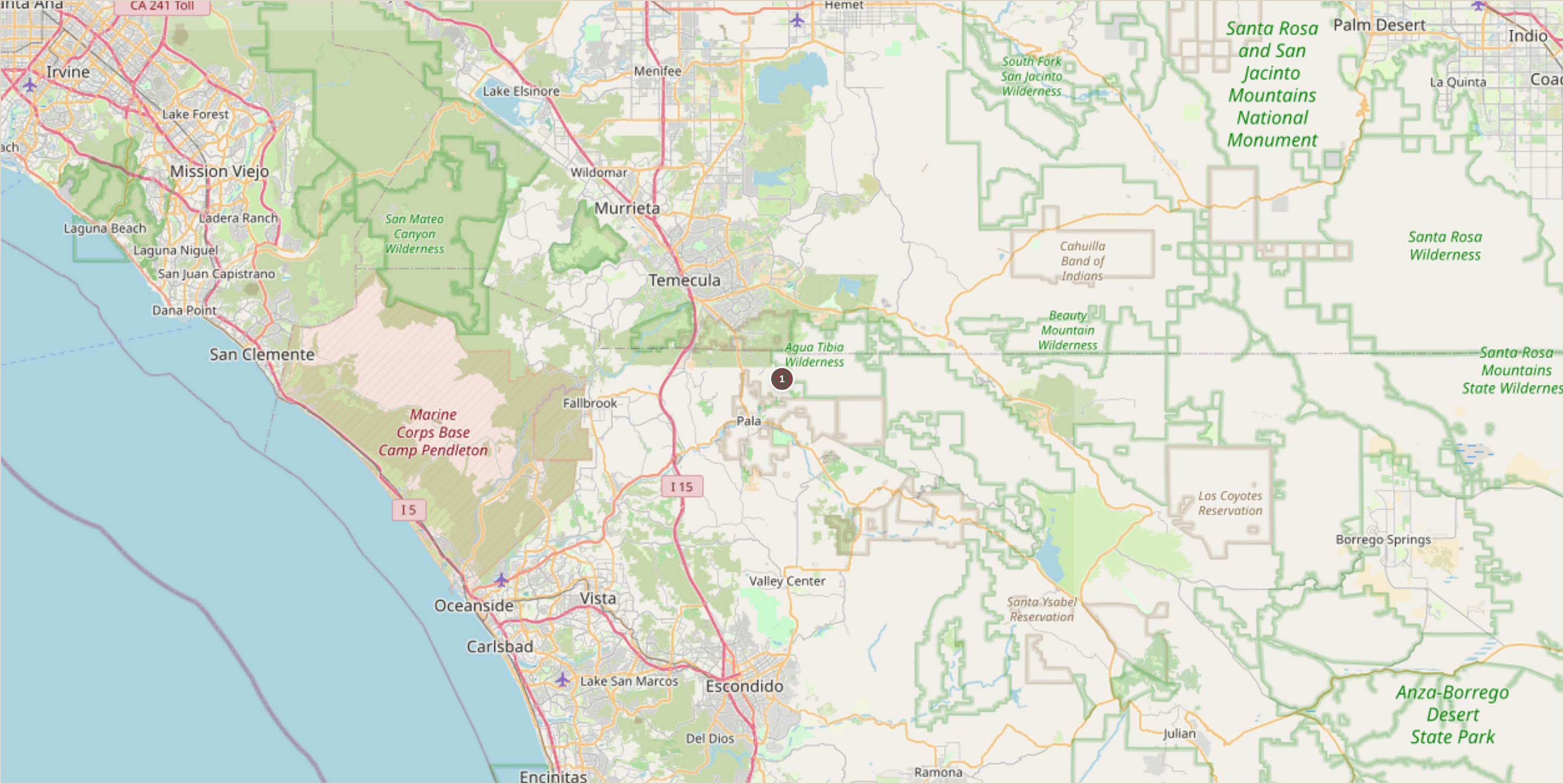
Sites where tourmaline has been documented by our field team.
Your next step
Now that you know tourmaline, here’s the logical next move.
Recommended next step
See where to find tourmaline in the field
1 documented sites with GPS coordinates, access info, and collecting tips.
Sources & References
- Tourmaline Description — GIA
- Schorl — Handbook of Mineralogy
- Elbaite — Handbook of Mineralogy
- File:Tourmaline (GeoDIL number - 1013).jpg — Wikimedia Commons