
Table of Contents
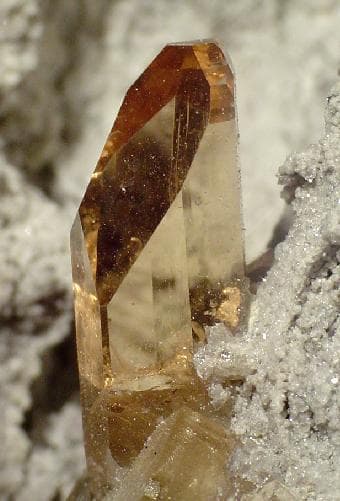
Topaz is one of the most important collector minerals for people who like crisp crystal form. Even plain colorless material can be worth attention because the habit, luster, and sharp faces make good specimens easy to appreciate.
The practical caution is cleavage. Topaz is hard enough to scratch quartz, but it is not tough in the way many beginners assume. A nice crystal can still break badly if you treat hardness as the whole durability story.
Appearance & Identification
- Hardness: Topaz is Mohs 8, so it is distinctly harder than quartz and many common field lookalikes.
- Cleavage: Perfect basal cleavage is one of the most important identifying and handling traits.
- Crystal habit: Crystals are often prismatic, blocky, and sharply terminated rather than six-sided quartz prisms.
- Luster: Fresh surfaces are strongly vitreous and often very bright on clean crystal faces.
How Topaz Forms
Topaz commonly forms in fluorine-rich igneous systems, especially pegmatites, rhyolites, and high-temperature vapor-rich cavities. That is why it turns up both in gem pegmatite districts and in volcanic localities such as Utah's Topaz Mountain.
Collectors often encounter it with quartz, feldspar, beryl-group minerals, or other late-stage cavity minerals. The growth environment matters because open space helps preserve the sharp crystal faces that make topaz so recognizable.
Where Topaz Is Found
Topaz is found worldwide, but collector-grade rough is strongly associated with pegmatites, rhyolite cavities, and greisen-style systems. Brazil, Pakistan, Russia, and the United States are all important collecting contexts.
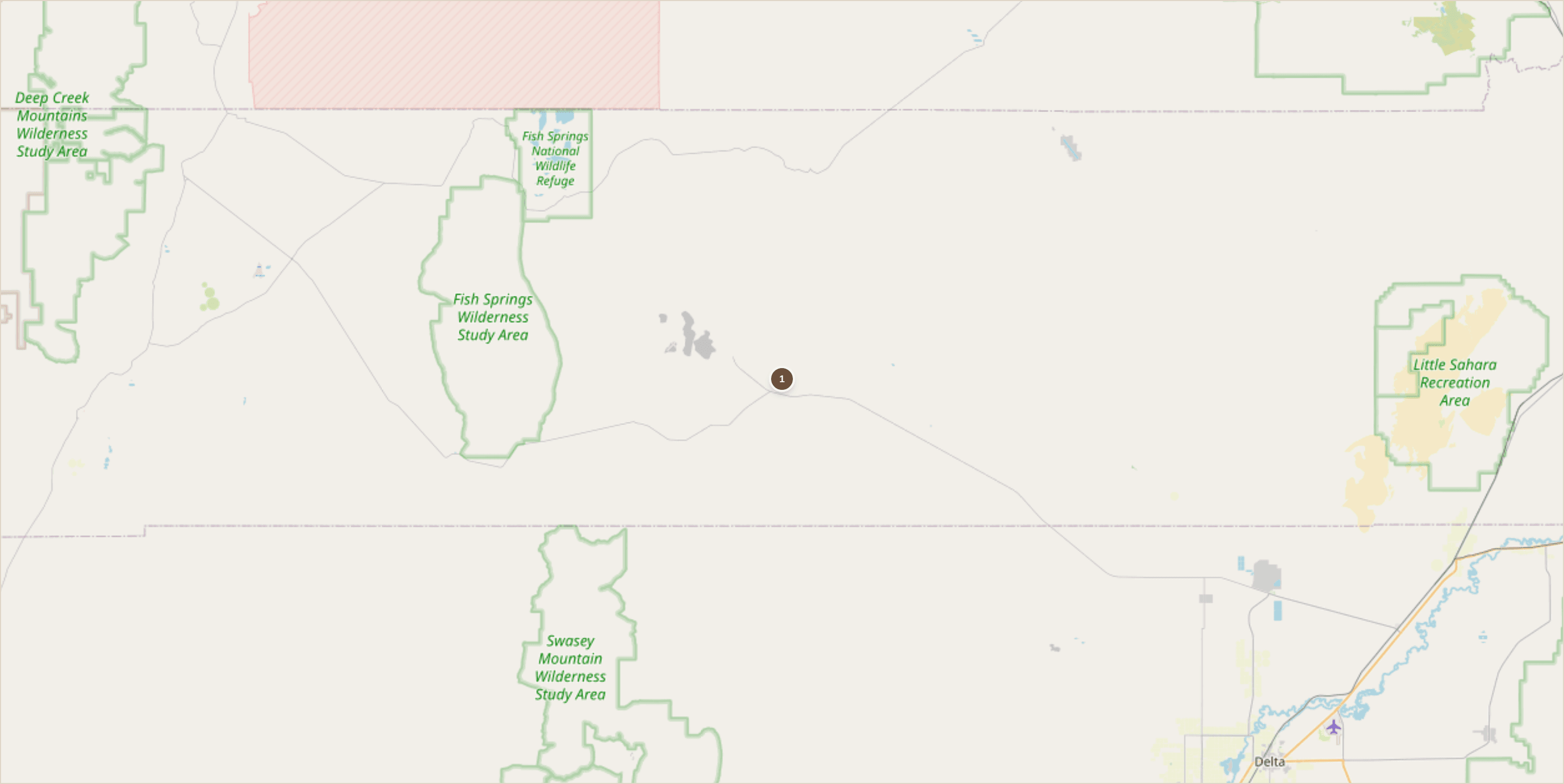
On this site, the strongest field context is Utah, where Topaz Mountain is a classic American locality. That locality matters because it gives beginners a concrete setting for how topaz occurs in rhyolitic cavities instead of only seeing cut gems in jewelry discussions.
Lookalikes & Similar Material
The most common field mistake is overcalling any clear or pale prismatic crystal as topaz. Habit helps, but hardness and cleavage are what keep the ID honest.
| Mineral | How to tell it apart from topaz |
|---|---|
| Quartz | Quartz is softer, lacks topaz's perfect cleavage, and usually does not show the same blocky orthorhombic crystal habit. |
| Aquamarine | Aquamarine is a beryl variety with hexagonal habit, while topaz shows different crystal proportions and much more dangerous cleavage. |
| Feldspar | Feldspar cleaves too, but it is softer and less glassy than topaz, and its cleavage pattern is not the same perfect basal break. |
Collecting Tips
- Protect clean cleavage directions and edges when wrapping specimens.
- Do not assume every pale prismatic crystal in rhyolite is topaz without hardness context.
- Judge damage and cleavage risk before deciding a crystal is worth extracting.
Before you go collecting…
Most beginners head out without knowing the basics. Our beginner’s guide covers gear, safety, and the field tests that’ll help you identify what you find.
Frequently Asked Questions
No. Natural topaz occurs in many colors, and much of the blue topaz in jewelry is treated colorless material.
Topaz has perfect basal cleavage, so even hard, attractive crystals can split cleanly if struck or handled badly.
Yes. Clear or pale rough can look similar at first, but hardness, crystal habit, and especially cleavage help separate them.
Where to find topaz
Sites where topaz has been documented by our field team.
Your next step
Now that you know topaz, here’s the logical next move.
Recommended next step
See where to find topaz in the field
1 documented sites with GPS coordinates, access info, and collecting tips.
Sources & References
- Topaz — Handbook of Mineralogy
- Topaz Description — GIA