
Table of Contents
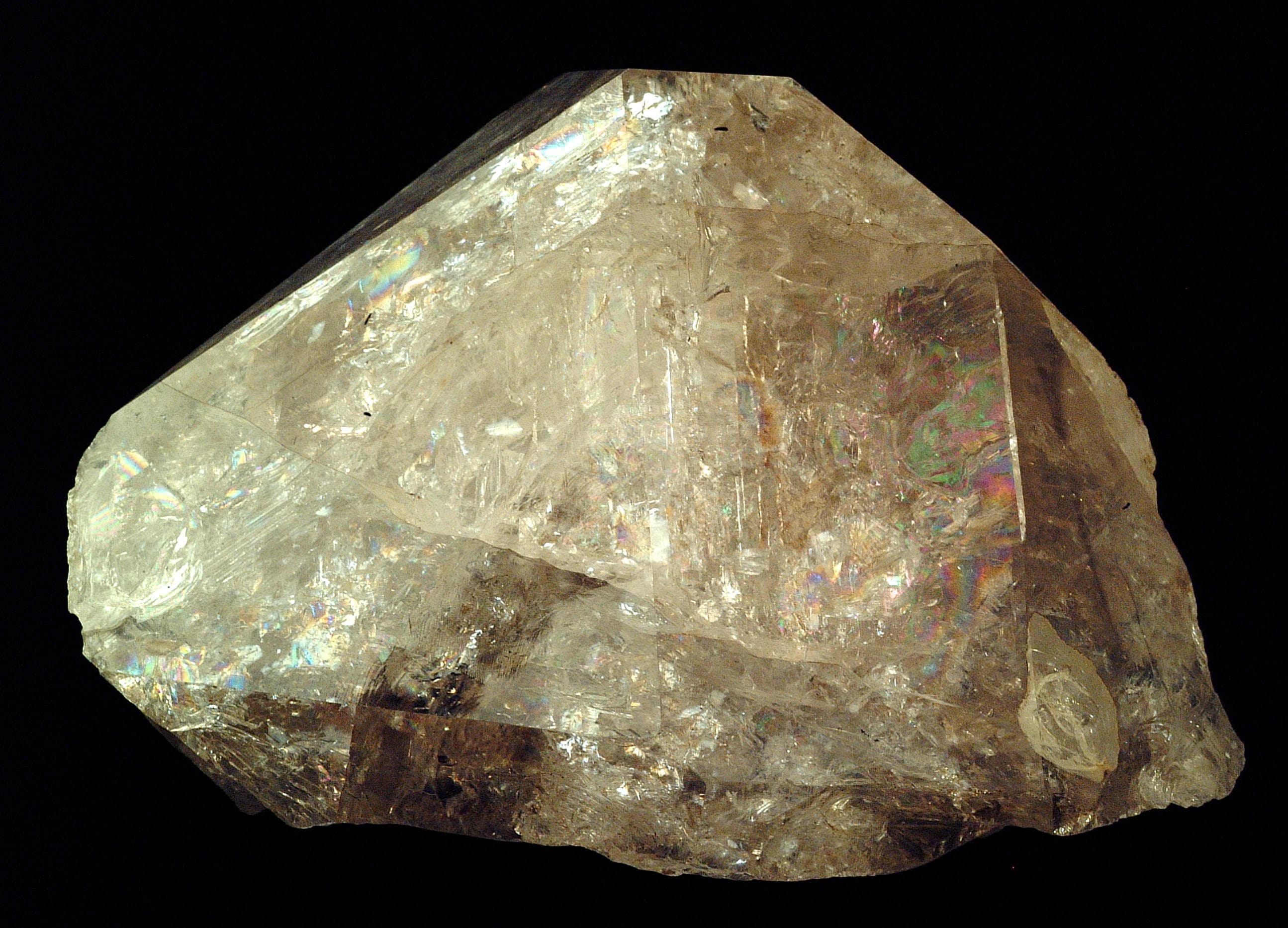
Quartz crystals are what many beginners picture when they hear the word quartz: glassy points, prismatic sides, and terminated ends that look distinctly mineral rather than just rocky. That visual instinct is not wrong, but it helps to say it more carefully. Quartz crystals are quartz specimens that preserved crystal form well enough for collectors to care about shape, clarity, and termination quality.
The practical field distinction is between crystal-form quartz and plain massive quartz. Both are still quartz, but the collecting strategy and specimen value are different.
Appearance & Identification
- Crystal faces: look for repeated flat faces meeting at consistent angles rather than random broken surfaces.
- Terminations: many quartz crystals end in pyramidal points, even if one end stayed attached to the matrix.
- Hardness: quartz crystals are still Mohs 7 and should scratch glass easily.
- Cleavage: none. Broken material shows conchoidal fracture rather than clean flat cleavage planes.
How Quartz Crystals Form
Quartz crystals form when silica-rich fluids or melts have enough open space for crystal faces to develop. Hydrothermal veins, cavities, vugs, pegmatites, and geodes are classic settings because the mineral has room to grow outward rather than just filling a fracture as massive quartz.
That is why collectors chase pockets and open spaces. Tight growth conditions produce more massive or intergrown material, while open space rewards symmetry and termination.
Where Quartz Crystals Are Found
Quartz crystals occur worldwide in veins, pegmatites, alpine fissures, geodes, and cavity-rich volcanic or sedimentary settings. On this site, the most obvious examples include Mount Ida, Diamond Point, Topaz Mountain, and Herkimer-related quartz localities.
Verified places you can actually go
Each of these rests on a published rule from the agency or operator, checked in August 2026. Rules change, so confirm before you drive.
- Mount Ida, Arkansas. The quartz capital: a free Forest Service surface site at Crystal Vista plus long-running fee digs. Our Mount Ida guide covers all three.
- Crystal Park, Montana. A Forest Service dig site at 7,800 ft where quartz and amethyst crystals weather out of decomposed granite. $5 per person, hand tools only, open roughly mid-May to mid-October.
- Herkimer country, New York. The doubly terminated crystals everyone knows. Fee digs run daily in season — our Herkimer guide covers where and how.
These sit on our rockhounding map with coordinates and the source behind each access claim.
What Collectors Confuse With Them
| Mineral | How to tell it apart from quartz crystals |
|---|---|
| Calcite | Calcite can form showy crystals too, but it is much softer, cleaves perfectly, and reacts in dilute acid. Quartz crystals stay harder and cleavage-free. |
| Glass | Glass may look clear and shiny, but it lacks natural crystal faces and usually shows bubbles, molded shapes, or irregular breaks instead of repeated crystal geometry. |
| Feldspar | Feldspar crystals are usually less glassy and show cleavage, while quartz crystals break conchoidally and often carry sharper prismatic faces and terminations. |
Collecting Tips
- Protect terminations first. Broken points lose much of the appeal.
- Look for attached crystals before prying loose fragments blindly.
- Judge specimens by damage, clarity, and growth habit together.
- Do not mistake every clear point for “gem quality.”
Before you go collecting…
Most beginners head out without knowing the basics. Our beginner’s guide covers gear, safety, and the field tests that’ll help you identify what you find.
Frequently Asked Questions
No. Quartz crystals are still quartz. The term usually means quartz that formed recognizable crystal faces and terminations instead of massive vein quartz or microcrystalline silica.
Clarity depends on inclusions, fractures, growth interruptions, and impurities. Clear crystals simply formed under cleaner or more stable conditions.
Not always. Damage, tight growth space, partial attachment, and broken terminations can obscure the ideal crystal shape.
Where to find quartz crystals
Sites where quartz crystals has been documented by our field team.
Arizona
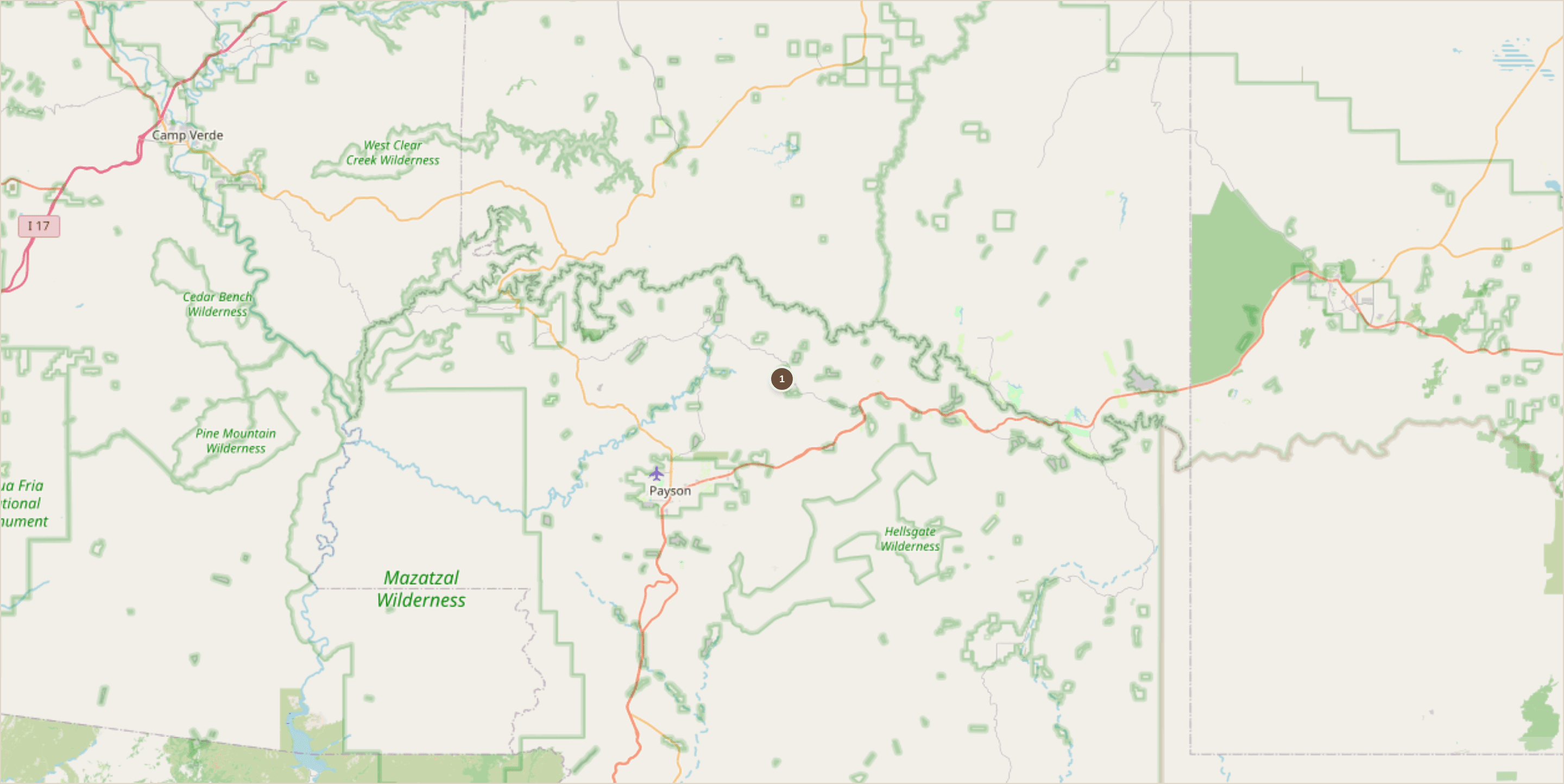
ModerateDiamond Point
Tonto National Forest quartz locality near Payson, known for doubly terminated crystals and a cooler-season alternative to lower-desert collecting.
Arizona
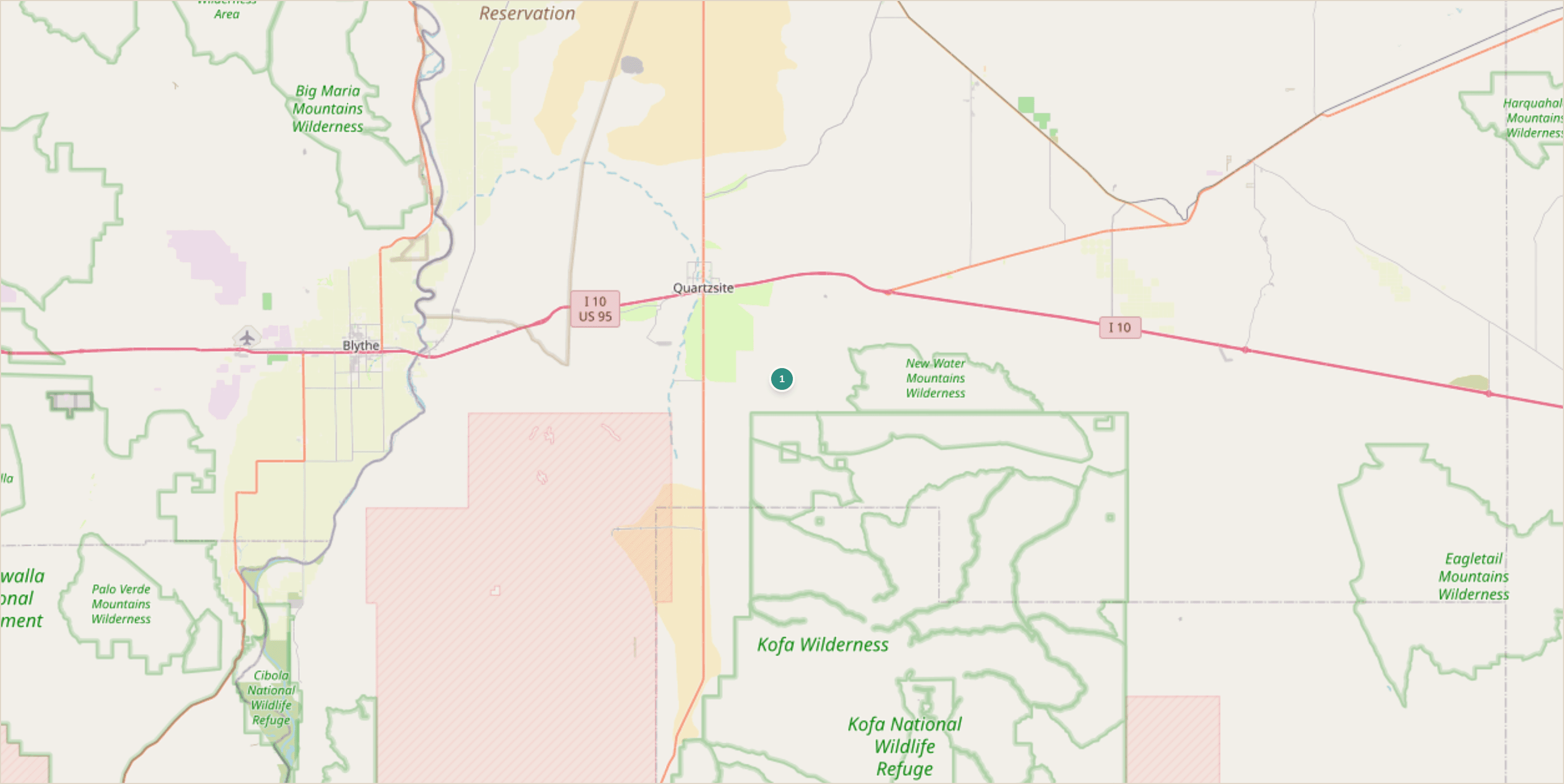
EasyCrystal Hill Area
Kofa National Wildlife Refuge crystal-collection area near Quartzsite. Best for surface searching loose quartz under refuge-specific rules.
Your next step
Now that you know quartz crystals, here’s the logical next move.
Recommended next step
See where to find quartz crystals in the field
2 documented sites with GPS coordinates, access info, and collecting tips.
Sources & References
- Crystal Park Picnic and Mineral Collection Area — US Forest Service, Beaverhead-Deerlodge National Forest
- Quartz — Handbook of Mineralogy
- Quartz Mineral Data — Webmineral
- Quartz (GeoDIL number - 935) — Wikimedia Commons