
Table of Contents
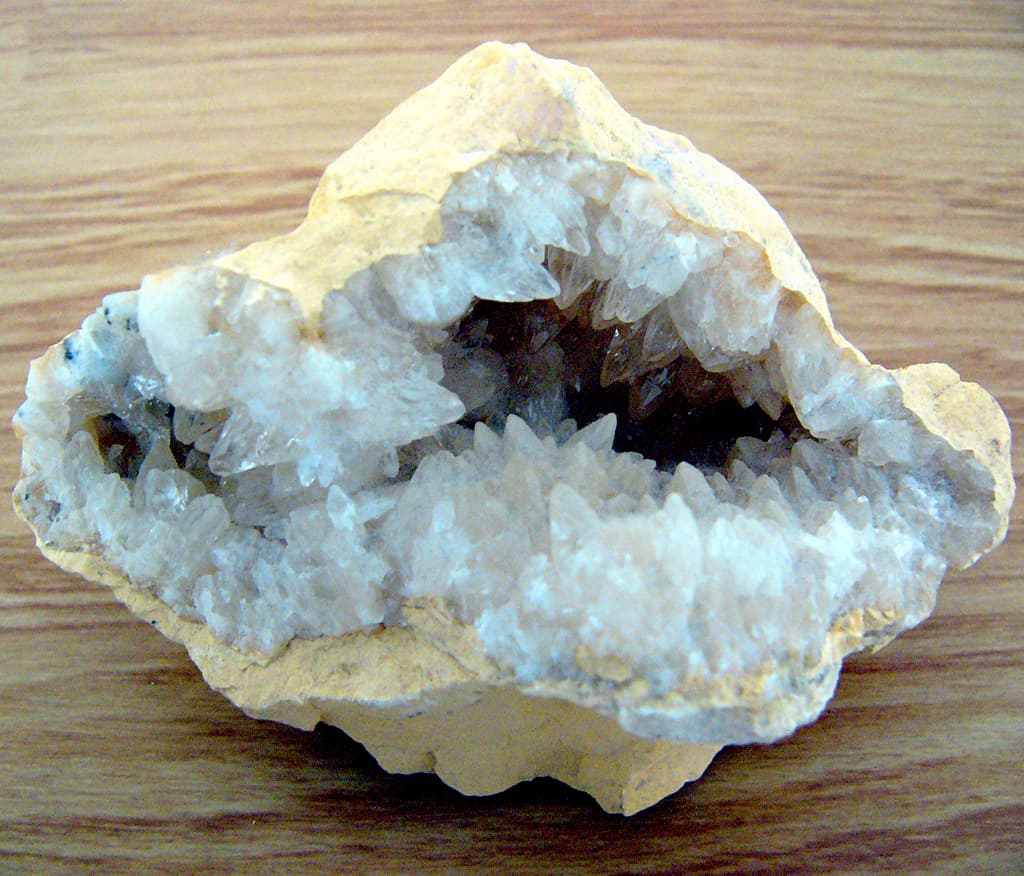
Geode is one of the most common collector words that beginners use correctly for the wrong reasons. The appeal is obvious: a rounded, plain-looking rock can open to reveal crystals, chalcedony, or both.
The useful correction is that geode is a structural term, not a single mineral. What matters is the cavity-bearing nodule and the way it filled, not one universal chemistry shared by every geode on earth.
Appearance & Identification
- Exterior: Many geodes have plain, weathered exteriors that do not advertise the interior well.
- Interior: The inside may be hollow, partly hollow, or lined with crystals such as quartz or calcite.
- Weight: Some geodes feel light for their size because of interior void space, though this is not foolproof.
- Context: Geode-rich districts often produce many nodules in specific sedimentary or volcanic settings rather than random isolated finds.
How Geodes Form
Geodes form when a cavity develops inside a nodule or host rock and later becomes lined or filled by minerals from circulating fluids. In many classic examples, silica and other minerals deposit layer by layer on the cavity walls.
That is why two geodes from the same area can still look different inside. The cavity history, fluid chemistry, and amount of later filling all affect the final specimen.
Where Geodes Are Found
Collectors find geodes in both sedimentary and volcanic settings, depending on the district. Some regions are known for small quartz-lined nodules, while others produce larger amethyst or calcite interiors.
On this site, Keokuk in Iowa and Dugway in Utah are the two clearest field contexts because they show how strong locality identity shapes what collectors mean when they say geode hunting.
Verified places you can actually go
Each of these rests on a published rule from the agency or operator, checked in August 2026. Rules change, so confirm before you drive.
- Rockhound State Park, New Mexico. The rare park where taking rocks home is the point. The state rule allows up to 15 lbs per visitor, souvenirs only, hand tools only. Agate is common; thundereggs and geodes are the prized finds.
- Dugway Geode Beds, Utah. BLM ground in the west desert. Our Dugway guide covers access and what the beds produce.
- Wiley Well District, California. BLM-listed geode district south of I-10 near Blythe, with the Hauser beds as the classic stop. Graded dirt roads past the pavement, and a winter destination, not a summer one.
- The Keokuk region, Iowa–Missouri–Illinois.The famous tri-state geode country. Most productive ground is private or permission-based; the reliable route in is a fee dig such as Sheffler's on the Missouri side, by appointment. Our Keokuk region guide covers the access story honestly.
All of these sit on our rockhounding map with coordinates and the source behind each access claim.
Lookalikes & Similar Material
Most field mistakes come from calling every rounded nodule a geode before checking whether there is actually a cavity or crystal-lined interior involved.
| Mineral | How to tell it apart from geodes |
|---|---|
| Thunder Eggs | Thunder eggs are rhyolitic nodules and are usually more solid and structurally different than classic hollow geodes. |
| Chalcedony | Solid chalcedony nodules may look similar outside, but they lack the open cavity or crystal-lined interior expected in a true geode. |
| Quartz Crystals | Quartz crystals may line a geode interior, but the geode itself is the whole cavity-bearing rock body, not just the crystals. |
Collecting Tips
- Learn the typical geode shapes and host beds of the district before collecting.
- Do not assume light weight alone proves a geode; some nodules are solid and some geodes are partly filled.
- Open specimens carefully because a good interior can be damaged in a single careless strike.
Before you go collecting…
Most beginners head out without knowing the basics. Our beginner’s guide covers gear, safety, and the field tests that’ll help you identify what you find.
Frequently Asked Questions
No. Some are partly filled, and some nodules sold as geodes are nearly solid inside.
Quartz, chalcedony, calcite, and amethyst are among the most common interior minerals.
Iowa's Keokuk region and Utah's Dugway Geode Beds are the strongest internal collecting contexts here.
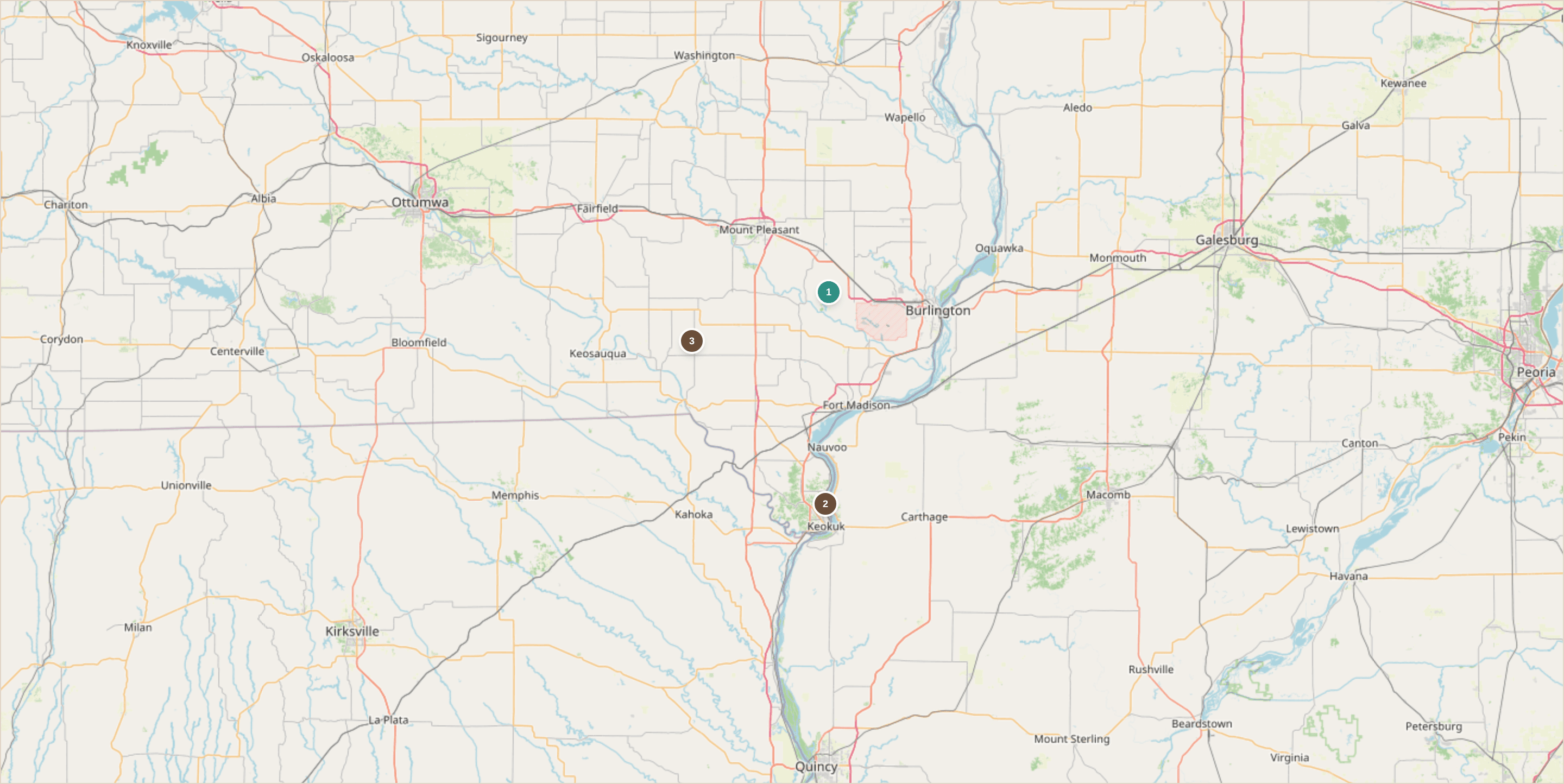
Where to find geodes
Sites where geodes has been documented by our field team.
Your next step
Now that you know geodes, here’s the logical next move.
Recommended next step
See where to find geodes in the field
1 documented sites with GPS coordinates, access info, and collecting tips.
Sources & References
- Geodes — Iowa Geological Survey
- N.M. Admin. Code § 19.5.2.25 — Rock Collecting — New Mexico Administrative Code (via Cornell LII)
- Geologic Tour: Rockhound State Park — New Mexico Bureau of Geology & Mineral Resources
- Wiley Well District Geode Beds — Bureau of Land Management
- Sheffler Rock Shop and Geode Mine — Sheffler Rock Shop
- Chalcedony and Quartz Varieties — USGS