
Table of Contents
Specimen Mountain is not a collecting destination, and it is better to say that plainly than to dress it up as a borderline rockhounding stop. Rocky Mountain National Park rules prohibit removing, digging, possessing, or disturbing natural resources or features, and the park's own closure page says the Crater and the surrounding open tundra slopes on Specimen and Shipler Mountains are closed year-round.
That means the useful trip here is a geology and access lesson. You can still learn a lot from the park's rocks, glaciers, and high-country landscape, but you should not expect to legally collect anything from the mountain itself.
Best Geology Stops at Specimen Mountain
The two useful "sites" here are really a closure zone and a viewing corridor. Both matter because they tell you how the park manages access, and both make the same point: the mountain is for seeing, not collecting.
Specimen Mountain closure area
Rocky Mountain National Park says the Crater and the surrounding open tundra slopes on Specimen and Shipler Mountains are closed year-round to all travel for the protection of bighorn sheep. That alone is enough to make this a no-collecting location, and the park rules also prohibit removing, digging, possessing, or disturbing natural resources or features.
Tip: Do not try to treat the closure as a route suggestion. Use the area as a reminder that not every named mountain is a collecting mountain, then go elsewhere for legal field collecting.
Rocky Mountain National Park viewpoints and roads (public access)
The park's geologic resources are still worth seeing even when collecting is not allowed. RMNP's geodiversity and geologic activity pages describe a landscape of ancient crystalline rocks, glacial valleys, volcanoes, lava, and ash, so the practical value here is education and observation rather than take-home material. Use the public access corridor around the visitor center and road viewpoints rather than any closure edge.
Tip: Use the visitor centers, marked roads, and designated pullouts to understand the geology without stepping off-trail or crossing into closed areas. Treat this as an education stop tied to public access, not as a proxy for the closed high-country slopes.
Rocks and Minerals You Can Observe at Specimen Mountain
The park's geologic pages describe ancient crystalline rocks, glacial valleys, lava, ash, and other features that make the range an excellent place to read Colorado's geologic story. That means you can study the landscape, learn the rock families, and see how high-elevation terrain changes without expecting a collecting reward.
In practical terms, the value here is visual and educational: granite, gneiss, schist, glacial deposits, and alpine landforms. The right frame is "what does this teach me?" rather than "what can I bring home?"
- Ancient crystalline basement rocks are part of the park story.
- Glacial valleys and alpine scenery are the main field features.
- Volcanic and sedimentary history in the park is worth reading, not harvesting.
Specimen Mountain Collecting Rules & Access
The most important rule is the simplest one: do not remove natural resources or features from the park. The park rules also say vehicles, hikers, and other visitors must stay within designated roads, trails, and open areas, and the closure page specifically says that some areas of the park are closed year-round.
If you are using Specimen Mountain as a waypoint for understanding the park, the safest assumption is that closure signs and visitor-center updates matter more than old trip reports. That is especially true for the high tundra and any route that sounds like it might cross the closure area.
| Access question | Practical answer |
|---|---|
| Can you collect? | No. Natural resources and features cannot be removed or disturbed. |
| Can you enter the closure area? | No. The Crater and surrounding open tundra slopes are closed year-round. |
| What should guide a visit? | Road status, closure signs, and designated park access only. |
Best Time to Visit Specimen Mountain
Summer and early fall are the most practical windows because road access and visitor services are more predictable. Even then, conditions can change fast at altitude, so the current park alerts matter more than a general season label.
Winter and shoulder-season visits can work if your goal is scenery and geology education, but they do not change the collection rules. The park stays a park, and the closures stay closures.
Recommended Gear
Bring layers, water, sun protection, a map or downloaded park info, and sturdy walking shoes. Binoculars and a camera are more useful here than a collecting kit because the point is to observe the landscape rather than work it.
If you are planning a longer alpine day, add cold-weather gear and be ready for rapid weather changes. The mountain environment is unforgiving when you underpack.
Safety Tips
High elevation, thin air, wildlife, and abrupt weather are the big risks. The park rules page also makes clear that closure violations can carry serious penalties, so the best safety move is to stay on the open side of every sign and every map update.
The practical field safety message is not complicated: do not wander into closed tundra, do not shortcut through resource-protection areas, and do not treat a geology lesson as an excuse to ignore park boundaries.
Common Mistakes
- Assuming a mountain name means collecting is allowed.
- Ignoring the year-round closure around the Crater and Specimen slopes.
- Stepping off designated access routes to get a better look at the rocks.
- Bringing a collecting mindset instead of an observation mindset.
- Failing to check current park alerts before driving to high elevation.
FAQ
Specimen Mountain is useful precisely because it makes the boundary between geology and collecting obvious. The park is rich in geological context, but not in legal take-home material, and that distinction should shape the whole visit.
Planning your first collecting trip?
Most beginners skip the preparation step. Don’t — our beginner’s guide covers gear, safety, and field ID basics that’ll save you time and frustration.
Community
Recent discussion about Specimen Mountain
Field reports, tip-offs, and follow-up questions that belong next to this location guide.
Local discussion loads after the page is ready so the guide itself stays fast and fully readable.
Loading recent discussion for this area...
Frequently Asked Questions
No. RMNP rules prohibit removing, digging, possessing, or disturbing natural resources or features, and the Specimen/Shipler closure area is also closed year-round to all travel.
The name is useful as a geology label, but it is not a collecting endorsement. The park's official materials focus on geology, scenery, and conservation rather than mineral collecting.
No. The Crater and surrounding open tundra slopes on Specimen and Shipler Mountains are closed year-round to all travel for the protection of bighorn sheep.
Use the park to learn the geology, see glacial landforms, and understand the rock types in the central Rockies. If you want to collect, plan a separate trip to a legal collecting area outside the park.
Summer and early fall are the practical windows because roads and services are most available then, but you still need to check current closures and weather before starting the drive.
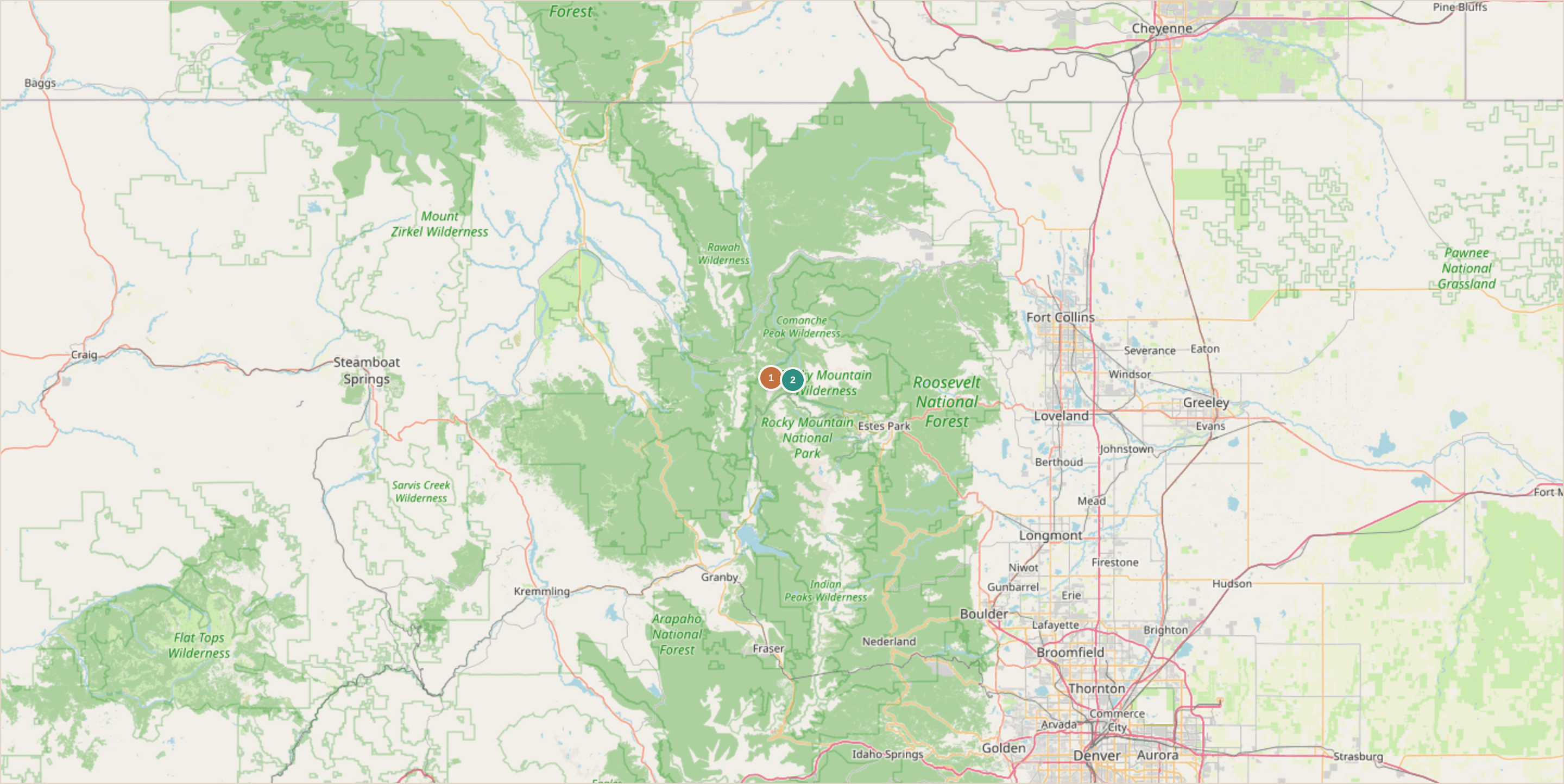
Collecting sites in Specimen Mountain
Click a marker for site details on the map.
Loading map...
Your next step
Heading to Specimen Mountain? Read this before you go.
Recommended next step
Learn to identify what you find in Specimen Mountain
Practical field tests for the minerals at this site — streak, hardness, luster, and crystal habit.
Sources & References
- Rules & Regulations - Rocky Mountain National Park — National Park Service
- Area Closures to Protect Plants & Animals — National Park Service
- Geologic Activity - Rocky Mountain National Park — National Park Service
- NPS Geodiversity Atlas - Rocky Mountain National Park, Colorado — National Park Service