
Table of Contents
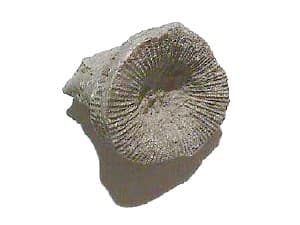
Fossil coral is a broad collector term, not one single fossil form. What ties the material together is preserved coral structure, whether the piece is chalky limestone, beach-rounded coral fossil, or more heavily silicified lapidary rough.
That broadness is useful because it keeps you from forcing every coral-patterned rock into a narrow locality name such as Petoskey stone when the specimen really belongs in the wider fossil coral category.
Appearance & Identification
- Pattern: Look for repeating cellular, radial, or colony-style coral structures rather than shell fragments alone.
- Host rock: Fossil coral often appears in limestone or in material derived from fossil-bearing marine units.
- Hardness: Hardness varies widely depending on whether the specimen is still carbonate-rich or more strongly silicified.
- Polish response: Some fossil coral takes a strong polish, especially when silicified, while softer limestone forms stay duller.
How Fossil Coral Forms
Fossil coral begins as the skeleton of coral colonies in marine settings. Burial, lithification, and later geologic change preserve the structure in rock.
Some specimens stay largely carbonate-based, while others are partly or heavily replaced by silica or other minerals. That is why fossil coral can range from soft limestone-like pieces to tough lapidary material.
Where Fossil Coral Is Found
Collectors find fossil coral in marine sedimentary rocks, beach deposits derived from fossil-bearing units, and silicified fossil localities. The exact material depends heavily on the district.
On this site, Michigan is the strongest practical example because shoreline collecting there introduces many people to coral-patterned fossil stones through Petoskey-style finds.
Lookalikes & Similar Material
The main confusion is not with unrelated minerals. It is with other fossil-rich limestones or with over-specific locality names used too loosely.
| Mineral | How to tell it apart from fossil coral |
|---|---|
| Petoskey Stones | Petoskey stones are a specific Michigan fossil coral type, while fossil coral is the broader category. |
| Limestone Fossils | Limestone fossils include many organisms besides coral, so the pattern may be shells, fragments, or impressions rather than coral colony structure. |
| Petrified Wood | Petrified wood preserves plant anatomy instead of coral cells or coral colony geometry. |
Collecting Tips
- Learn the characteristic coral pattern of your collecting district before naming finds too narrowly.
- Check whether the material is soft limestone or silicified lapidary rough before cleaning aggressively.
- Use locality labels carefully so you do not turn every coral fossil into a branded collector term.
Before you go collecting…
Most beginners head out without knowing the basics. Our beginner’s guide covers gear, safety, and the field tests that’ll help you identify what you find.
Frequently Asked Questions
No. Petoskey stones are one specific fossil coral type, while fossil coral is the broader category.
Yes. Some fossil coral is silica-rich and polishes well, while other material remains more clearly limestone-based.
Repeating coral structure is the main clue, whether the specimen is cellular, radiating, or colony patterned.
Your next step
Now that you know fossil coral, here’s the logical next move.
Recommended next step
Find collecting locations near you
Detailed field guides to rockhounding sites across the country.
Sources & References
- Petoskey Stone Information — Michigan DNR