
Table of Contents
Diamond is one of the most over-assumed minerals in beginner collecting. People know the name before they know the mineral, which is exactly why nicknames such as Herkimer diamonds can create so much confusion.
The mineral reality is simple: diamond is crystalline carbon, not quartz, not topaz, and not a generic label for anything clear and sparkly. That correction matters immediately when you move from jewelry talk to field identification.
Appearance & Identification
- Hardness: Diamond is Mohs 10, the hardest mineral on the scale.
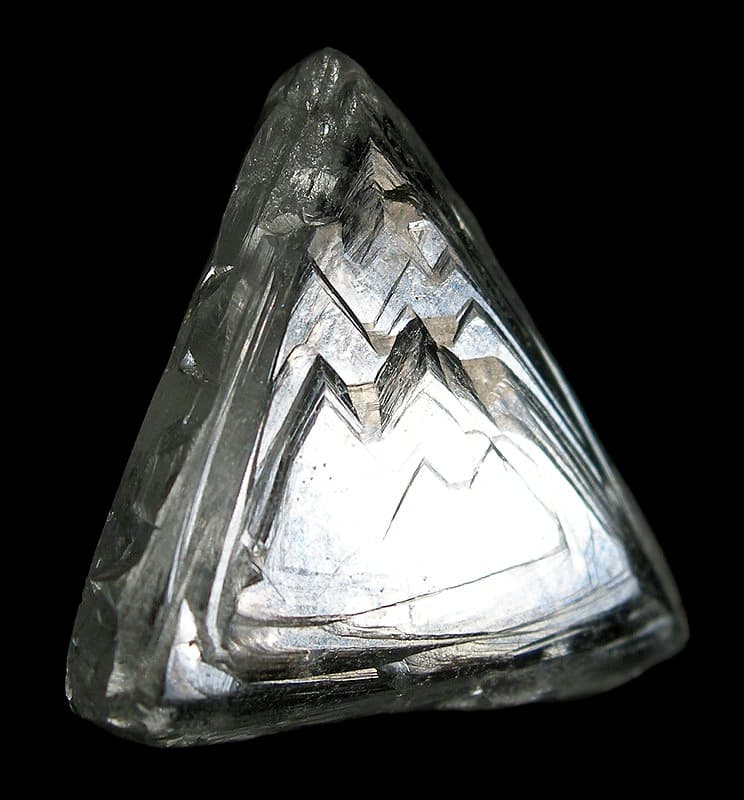
- Luster: Fresh surfaces can show adamantine luster, which is different from ordinary vitreous quartz shine.
- Cleavage: Perfect octahedral cleavage means hardness does not equal invincibility.
- Crystal system: Natural crystals commonly reflect isometric habits rather than prismatic quartz or beryl forms.
How Diamonds Form
Diamonds form deep in the mantle under high pressure and high temperature, then reach the surface through kimberlite or lamproite-related volcanic transport.
That geological origin is why real diamond occurrences are so different from the quartz cavities and pegmatites tied to many of the other collector minerals on this site.
Where Diamonds Are Found
Important diamond-producing regions include parts of Africa, Russia, Canada, and Australia, along with smaller occurrences elsewhere. The geology is specialized, and not every diamond-bearing district is open to casual collecting.
For this site, Arkansas matters most because Crater of Diamonds State Park is one of the clearest legal public examples of diamond collecting in the United States.
Lookalikes & Similar Material
The biggest confusion is not natural diamond versus another carbon mineral. It is the casual use of 'diamond' as a nickname for quartz or other clear crystals.
| Mineral | How to tell it apart from diamonds |
|---|---|
| Herkimer Diamonds | Herkimer diamonds are quartz crystals with a nickname, while real diamonds are crystalline carbon with very different hardness, luster, and crystal system. |
| Topaz | Topaz is hard and clear in some cases, but it still sits below diamond hardness and belongs to a different mineral family. |
| Clear Quartz | Quartz can be bright and transparent, but it is far softer and lacks diamond's adamantine luster and octahedral cleavage relationship. |
Collecting Tips
- Keep the geology in mind because real diamond occurrence is much more specialized than clear-crystal collecting.
- Do not use the word diamond loosely when the specimen is really quartz or another lookalike.
- Treat cleavage seriously even when the mineral's hardness is exceptional.
Before you go collecting…
Most beginners head out without knowing the basics. Our beginner’s guide covers gear, safety, and the field tests that’ll help you identify what you find.
Frequently Asked Questions
No. Herkimer diamonds are quartz. Real diamonds are crystalline carbon.
No. Diamond is extremely hard, but cleavage means it can still break if hit in the wrong direction.
Arkansas is the main internal context because Crater of Diamonds State Park is the clearest legal public collecting reference in this site's location coverage.
Your next step
Now that you know diamonds, here’s the logical next move.
Recommended next step
Find collecting locations near you
Detailed field guides to rockhounding sites across the country.
Sources & References
- Diamond — Handbook of Mineralogy
- Diamond Description — GIA