
Table of Contents
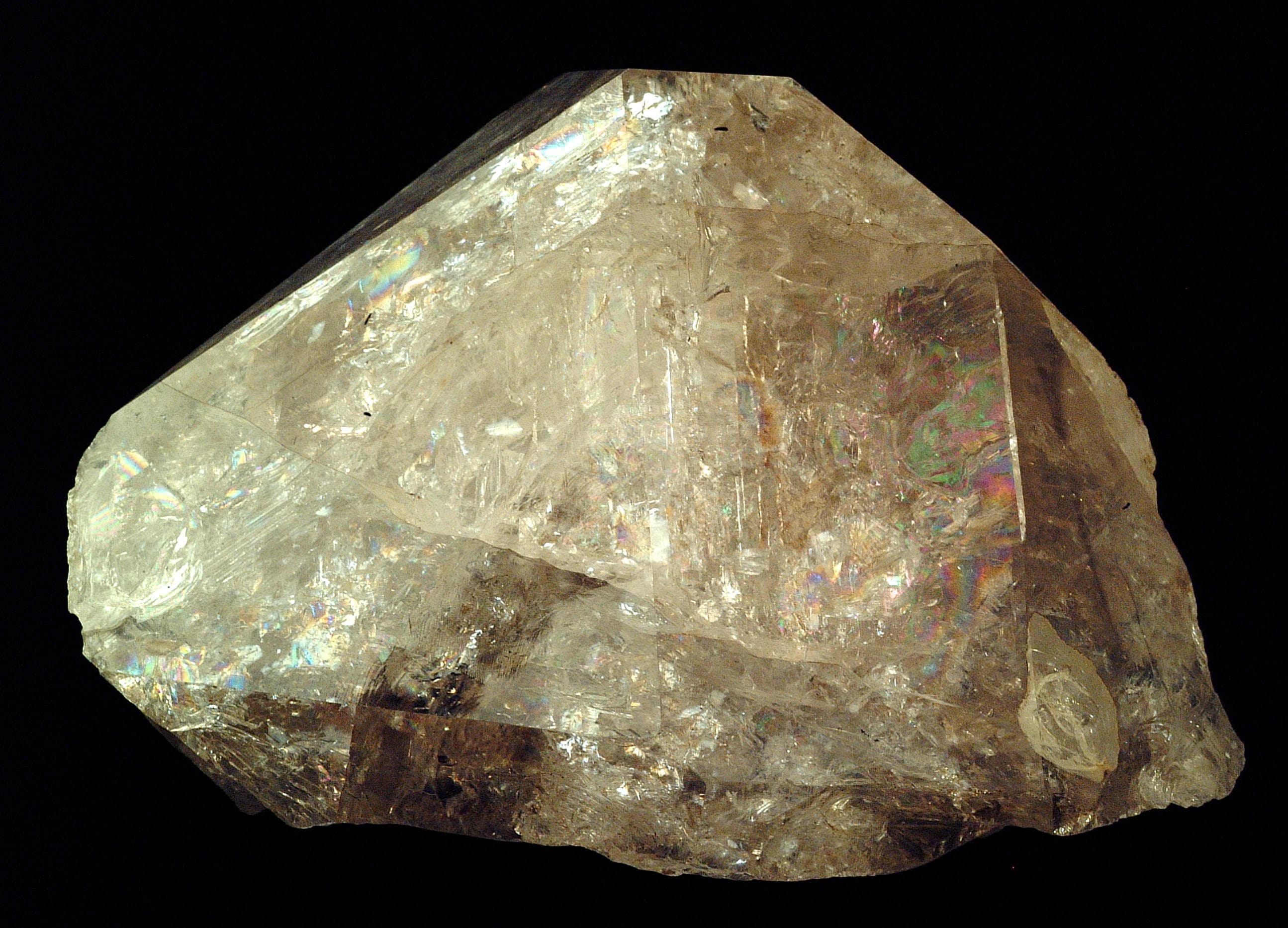
Clear quartz is quartz without a strong body color. The older collector label rock crystal is still common, especially when people want to emphasize that the specimen is valued for clarity and crystal form rather than for a color variety such as amethyst, smoky quartz, or citrine. It is still the same mineral species: quartz.
That means the basic mineral ID does not change. What changes is how the specimen is judged. A collector looking at clear quartz pays close attention to transparency, inclusions, internal fractures, face damage, and whether the termination looks complete enough to make the crystal feel intact.
Appearance & Identification
The identification work is still quartz: Mohs 7 hardness, no cleavage, vitreous luster, and crystal habit that often includes prismatic sides and pointed terminations. The extra question is clarity. A truly colorless specimen may still look cloudy if it contains dense inclusions, healed fractures, or fine internal veils.
What Affects Clarity
Inclusions, internal fractures, growth zoning, and surface damage all affect how clear the specimen looks. A crystal can be chemically clear but physically cloudy because of internal breakage or microfractures. Some collectors like perfectly open transparency, while others actively value ghost growth, veils, moving fluid inclusions, or faint internal textures that show how the crystal developed.
Surface condition matters too. A quartz point can look less transparent simply because the faces are frosted, etched, bruised, or covered by a film from the pocket. That is why you have to separate true internal clarity from a dirty or weathered exterior before judging the specimen.
Where Clear Quartz Is Found
Clear quartz occurs in many of the same settings as other well-formed quartz crystals: hydrothermal veins, alpine fissures, pegmatites, and cavity systems where growth space stayed open and relatively clean. Open growth space matters because a crystal needs room to develop clean faces and recognizable terminations rather than growing as a massive or tightly interlocked aggregate.
That does not mean every open-space quartz crystal will be colorless. Chemistry, irradiation history, inclusions, and lattice defects can still produce smoky, purple, or other quartz colors. Clear quartz is what remains when those color-driving factors stay limited enough that the specimen reads as colorless to nearly colorless.
How Collectors Judge It
Collector quality is rarely about a single number. A specimen may have excellent transparency but poor damage, or modest transparency but an elegant complete termination and strong luster. The better question is whether the whole piece feels complete and visually convincing.
- Clarity and transparency, including whether inclusions are distracting or interesting
- Termination completeness and whether the point looks naturally finished
- Damage to edges and faces, especially small bruises that kill luster
- Whether the base is natural, contacted, or obviously broken free
- Overall balance between transparency, luster, and crystal form
Before you go collecting…
Most beginners head out without knowing the basics. Our beginner’s guide covers gear, safety, and the field tests that’ll help you identify what you find.
Frequently Asked Questions
No. It is still quartz. The label simply emphasizes that the specimen is colorless or nearly colorless.
No. Many specimens are partly clear, partly included, or partly frosted. Collector quality depends on the whole crystal, not only absolute transparency.
Your next step
Now that you know clear quartz, here’s the logical next move.
Recommended next step
Find collecting locations near you
Detailed field guides to rockhounding sites across the country.
Sources & References
- Quartz — Handbook of Mineralogy
- Quartz (GeoDIL number - 935) — Wikimedia Commons